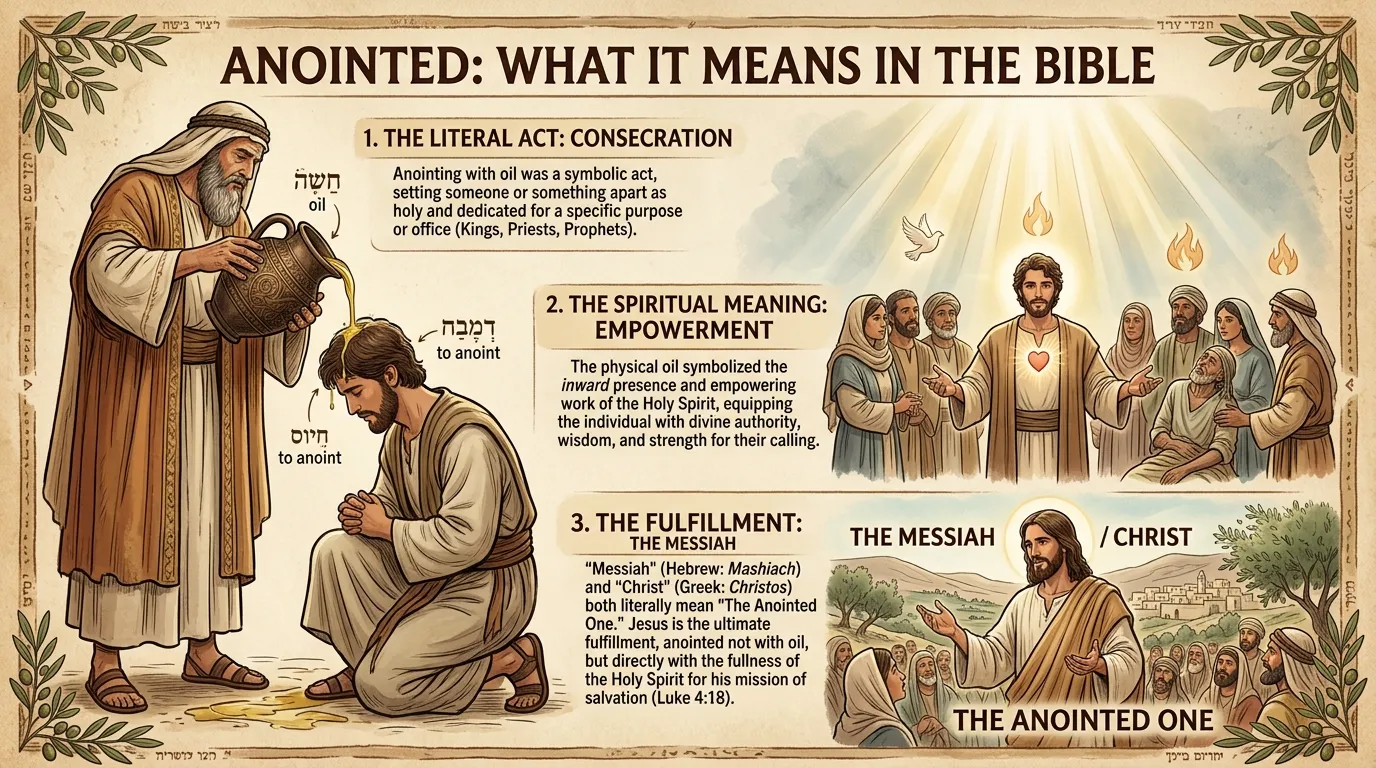
Imagine watching a king kneel as a prophet gently pours oil over his head. The room is quiet, but something powerful is happening. This is more than a simple act. It is a sign that God has chosen someone for a special purpose.
The word anointed appears many times in the Bible. Kings, priests, and prophets were anointed before they began the work God had given them. Even today, many Christians wonder what it means to be anointed.
They may hear the word during church services, read it in Scripture, or even dream about oil or anointing.
So, what is the anointed meaning in the Bible? Is it only about leaders in Bible times, or does it also speak to believers today?
The Bible teaches that anointing is much more than placing oil on someone’s head. It is a symbol of God’s presence, blessing, protection, and calling. It reminds us that God equips the people He chooses and gives them the strength to do His work.
Whether you are studying Scripture, seeking a deeper understanding of your faith, or looking for the meaning of an anointing dream, the Bible offers hope and clear guidance.
Let’s explore the biblical meaning of anointed, the spiritual symbolism behind it, and what this beautiful truth can teach us today.
Biblical Meaning of Anointed
The anointed meaning in the Bible centers on one main idea: God chooses, sets apart, and empowers a person for His purpose.
In the Old Testament, people were often anointed with oil. The oil was not magical. Instead, it was an outward sign that God had given someone a special mission.
Anointed Kings
One of the best-known examples is King David.
“Then Samuel took the horn of oil and anointed him… and the Spirit of the Lord came powerfully upon David.”
— 1 Samuel 16:13 (NIV)
David was still a young shepherd when God chose him to become king. His anointing showed that God’s plans often begin long before people see the results.
Anointed Priests
Priests were also anointed before serving in the temple.
Exodus 30:30
“Anoint Aaron and his sons and consecrate them so they may serve me as priests.”
Their anointing symbolized being made holy and dedicated to God’s service.
Anointed Prophets
Some prophets were also anointed to speak God’s truth.
1 Kings 19:16
This reminds believers that God equips those He calls to share His message.
Jesus: The Ultimate Anointed One
The greatest example is Jesus Christ.
The title Christ comes from a Greek word meaning “Anointed One.”
Luke 4:18
“The Spirit of the Lord is on me, because he has anointed me to proclaim good news to the people with low-income.”
Jesus was anointed by the Holy Spirit to bring salvation, healing, forgiveness, and hope to the world.
Anointing and the Holy Spirit
In the New Testament, anointing is closely connected with the Holy Spirit.
2 Corinthians 1:21-22
“Now it is God who makes both us and you stand firm in Christ. He anointed us, set his seal of ownership on us, and put his Spirit in our hearts.”
This verse teaches that believers receive God’s Spirit and are strengthened to live faithful lives.
A Symbol of Healing
Oil was also used when praying for the sick.
James 5:14
“Is anyone among you sick? Let them call the elders of the church to pray over them and anoint them with oil in the name of the Lord.”
Here, anointing represents faith, prayer, and trust in God’s healing power.
A Gentle Warning
Being anointed did not mean someone would never fail.
King Saul was anointed by God, but later chose disobedience over faithfulness.
His story reminds us that God’s calling should be met with obedience, humility, and trust.
The Bible encourages believers to remain close to God so they can continue walking in His purpose.
Spiritual Significance and Symbolism
The spiritual symbolism of anointing reaches beyond ancient ceremonies.
Today, it reminds Christians that God still calls ordinary people to serve Him in different ways.
God Chooses with Purpose
Anointing shows that God has a plan for every believer.
You may not become a king or prophet, but God can use your kindness, faith, prayers, and love to bless others.
God’s Presence
Anointing points to the presence of God.
When people seek Him through prayer and Scripture, they grow closer to His heart and receive wisdom for daily life.
Strength During Difficult Times
Life brings challenges, fear, and uncertainty.
Remembering God’s anointing reminds believers that He gives strength when they feel weak.
His Spirit helps people continue walking in faith even during hard seasons.
Spiritual Growth
Anointing also speaks of transformation.
As Christians spend time with God, they slowly become more patient, loving, forgiving, and faithful.
This spiritual growth reflects God’s work within them.
Everyday moments—helping a neighbor, praying for someone, or showing forgiveness—can become beautiful examples of living under God’s guidance.
Biblical Interpretations in Dreams or Real Life
Some people dream about being anointed with oil or seeing someone else receive anointing.
While the Bible does not explain every dream, it encourages believers to seek wisdom through prayer and Scripture rather than relying on dreams alone.
A peaceful dream about anointing may symbolize:
- God’s guidance
- A growing faith
- A new season of purpose
- Spiritual encouragement
- A reminder to trust God’s plan
If the dream feels confusing or frightening, it may simply encourage self-examination.
It can be a reminder to pray, seek God’s direction, and remain faithful during uncertain times.
In real life, hearing about anointing or participating in an anointing prayer often points believers back to God’s love, healing, and faithful presence.
Instead of focusing only on the symbol, Christians are encouraged to focus on the God who gives the blessing.
Practical Lessons & Faith Insights
The biblical meaning of anointing teaches us that God prepares those He calls.
Spend time in prayer.
Read God’s Word regularly.
Trust His timing even when you cannot see the full picture.
Remember that His strength is greater than your weakness, and His purpose for your life is always guided by love.
Conclusion
People with low-income demonstrate resilience and determination while managing financial challenges that can impact nearly every aspect of life.
Although limited income can make it difficult to cover essential expenses or prepare for unexpected emergencies, access to the right information, budgeting techniques, education, and community support can make a meaningful difference.
Improving financial well-being is often a gradual process rather than an immediate change.
Small, consistent steps such as creating a realistic budget, reducing unnecessary spending, increasing skills through education or training, and taking advantage of available assistance programs can help build long-term stability.
At the same time, supportive communities, fair employment opportunities, and accessible public services play an important role in helping individuals and families achieve greater financial independence.
By understanding the experiences of people with low-income and promoting practical, compassionate solutions, society can help create opportunities that lead to stronger financial security and a better quality of life for everyone.

I am James Clear, an author at BibleMeaniing.com. I enjoy writing about biblical wisdom, personal growth, and practical faith. Through my articles, I help readers apply timeless scriptural principles to their daily lives and spiritual journey.