Imagine someone placing oil on your head and praying over your life. In the Bible, this simple act carried deep meaning. Anointing was not just about oil. It was a sign of being set apart for God, blessed, chosen, healed, or prepared for a special purpose.
Many people search for the anointing meaning in the Bible because they want to understand what anointing means in Scripture and what it may mean for their own faith journey.
The word appears many times in the Bible, connected with kings, priests, prophets, healing, worship, and the work of the Holy Spirit.
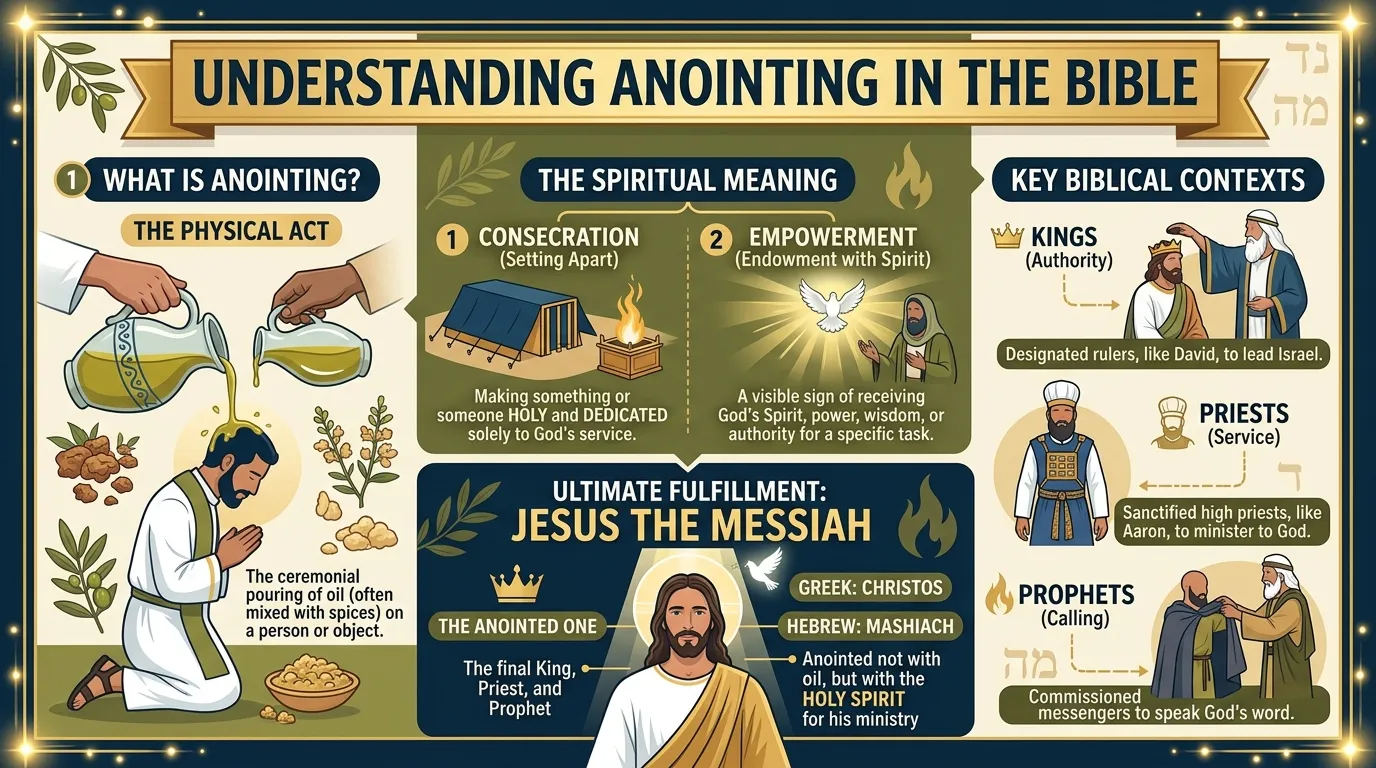
In Bible times, oil was often used in special ceremonies. Kings were anointed before leading God’s people. Priests were anointed for service. Oil was also connected with healing and care. Most importantly, anointing could show that a person had been set apart for God’s purpose.
Today, Christians may hear phrases such as “the anointing of God” or “anointed by the Holy Spirit.” These expressions point to God’s presence, calling, power, and work in a person’s life.
So, what is the biblical meaning of anointing? The Bible gives us several beautiful lessons about it.
Biblical Meaning of Anointing in the Bible
1. Anointing Means Being Set Apart for God
One of the clearest meanings of anointing is being chosen or set apart for God’s work.
In the Old Testament, people were often anointed with oil when they were appointed to an important role. Kings are a strong example.
Samuel anointed David after God chose him to become king:
“Then Samuel took the horn of oil and anointed him in the presence of his brothers.” — 1 Samuel 16:13
After David was anointed, the Bible says that the Spirit of the Lord came powerfully upon him.
This teaches an important truth. God’s calling is not based only on human ability. God can prepare an ordinary person for an extraordinary purpose.
2. Anointing Represents God’s Presence and Spirit
The story of David also connects anointing with the presence of God.
The oil itself was a physical sign. The deeper meaning was God’s work in the person’s life.
In the New Testament, this idea becomes even clearer. Paul writes:
“Now it is God who makes both us and you stand firm in Christ. He anointed us.” — 2 Corinthians 1:21
The following verse speaks about God putting His Spirit in believers as a guarantee.
For Christians, anointing can therefore point to God’s Spirit, presence, and work within a person’s life.
3. Anointing Can Mean Healing
Anointing is also connected with healing.
James 5:14 says:
“Is anyone among you sick? Let them call the elders of the church to pray over them and anoint them with oil in the name of the Lord.”
Here, oil is used together with prayer and faith.
This does not mean that the oil itself has magical power. The focus remains on the Lord. Anointing with oil can be a physical expression of trust in God’s care and healing.
When someone experiences anointing during prayer, it can remind them that God sees their pain and invites them to place their needs in His hands.
4. Anointing Can Show God’s Calling
Anointing can also represent a special calling or mission.
Jesus read from Isaiah and applied the words to Himself:
“The Spirit of the Lord is on me, because he has anointed me to proclaim good news to the people with low-income. .” — Luke 4:18
Jesus’ anointing was connected with His mission to bring good news, freedom, healing, and hope.
This gives an important spiritual lesson. God’s calling is not simply about receiving a title. It is about serving others and living according to His purpose.
5. Anointing Can Be Connected With Joy and Blessing
Psalm 23 gives another beautiful picture:
“You anoint my head with oil; my cup overflows.” — Psalm 23:5
David describes God as a caring Shepherd. The picture of oil shows care, honor, blessing, and abundance.
The verse reminds believers that God’s goodness can meet them even during difficult seasons.
6. Anointing Is Not a Promise of an Easy Life
There is also a warning worth remembering.
Being chosen by God does not mean a person will never face trouble. David was anointed to become king, yet he still experienced fear, rejection, waiting, and hardship.
His anointing did not remove every problem. Instead, God worked through those seasons to shape him.
This means the anointing meaning in the Bible should not be reduced to wealth, success, or a trouble-free life. It points more deeply to God’s purpose, presence, strength, and calling.
Spiritual Significance and Symbolism
The spiritual symbolism of anointing can speak deeply to a Christian’s daily life.
Anointing Symbolizes God’s Calling
You may sometimes wonder, “Does God have a purpose for my life?”
The story of David reminds us that God sees potential before other people see it. Anointing can symbolize being called to something meaningful.
Your calling may not involve a public position. It could be caring for your family, helping someone who is hurting, teaching others, serving your church, or showing kindness when nobody is watching.
Anointing Symbolizes Transformation
David was a young shepherd before becoming king. His life changed over time.
Anointing can therefore represent spiritual transformation. God can take someone from one season of life into another and prepare them for new responsibilities.
Growth may happen slowly. Prayer, patience, obedience, and faith can all be part of that process.
Anointing Symbolizes God’s Strength
Sometimes we know what we should do but feel too weak to do it.
The biblical idea of anointing reminds Christians that God’s work does not depend only on human strength.
When you feel tired or unsure, prayer can help you remember that God’s strength is greater than your weakness.
Anointing Symbolizes Hope
Anointing can also carry a message of hope.
If you are waiting for an answer, walking through change, or feeling uncertain about your future, the biblical picture of anointing can remind you that God is still working.
His timing may not look like your timing. Yet faith means continuing to trust Him.
Biblical Interpretations of Anointing in Dreams or Real Life
People may dream about oil, being anointed, receiving prayer, or seeing someone anointed. From a Christian perspective, such experiences should be approached with prayer and wisdom.
A peaceful dream involving anointing may remind someone of God’s care, calling, blessing, or spiritual growth.
Dreaming of being anointed for a special task may encourage reflection on whether God is leading you toward a new responsibility or season of service.
Seeing oil connected with healing may bring thoughts of prayer, restoration, and dependence on God.
However, not every dream is a direct divine message. The Bible should remain the foundation for Christian belief. Instead of assuming a dream predicts the future, bring it to God in prayer and compare its message with Scripture and biblical truth.
God’s guidance will never require you to reject what He has already revealed through His Word.
Practical Lessons and Faith Insights
The anointing meaning in the Bible encourages us to live with purpose.
- Pray when you need guidance.
- Trust God when His timing feels slow.
- Serve others with the gifts He has given you.
- Stay close to Scripture when seeking direction.
- Remember that God’s calling is about faithfulness, not fame.
Conclusion
The anointing meaning in the Bible is deeply connected with being chosen, consecrated, empowered, and set apart for God’s purpose. In the Old Testament, people, objects, and places could be anointed with oil as a visible sign of dedication to God.
Kings, priests, and prophets were especially associated with anointing because they were appointed for specific responsibilities.
In the New Testament, the meaning becomes even deeper through Jesus Christ. Jesus is presented as the Anointed One, and believers are also described as receiving an anointing from God.
This reminds Christians that their relationship with God is not simply about following religious practices; it is about living under His guidance, depending on His Spirit, and using their lives to serve His purposes.
Biblical anointing should not be understood merely as a symbol of success, wealth, or personal power. Its central message is dedication to God and empowerment for His work.
When Christians study anointing in Scripture, they can see a beautiful reminder that God calls people, equips them, and gives them strength to fulfill the responsibilities He places before them.

I am Brandon Sanderson, an author at BibleMeaniing.com. I love exploring the deeper meanings of Scripture and presenting biblical concepts in a clear and engaging way. My writing aims to inspire faith, understanding, and spiritual growth.