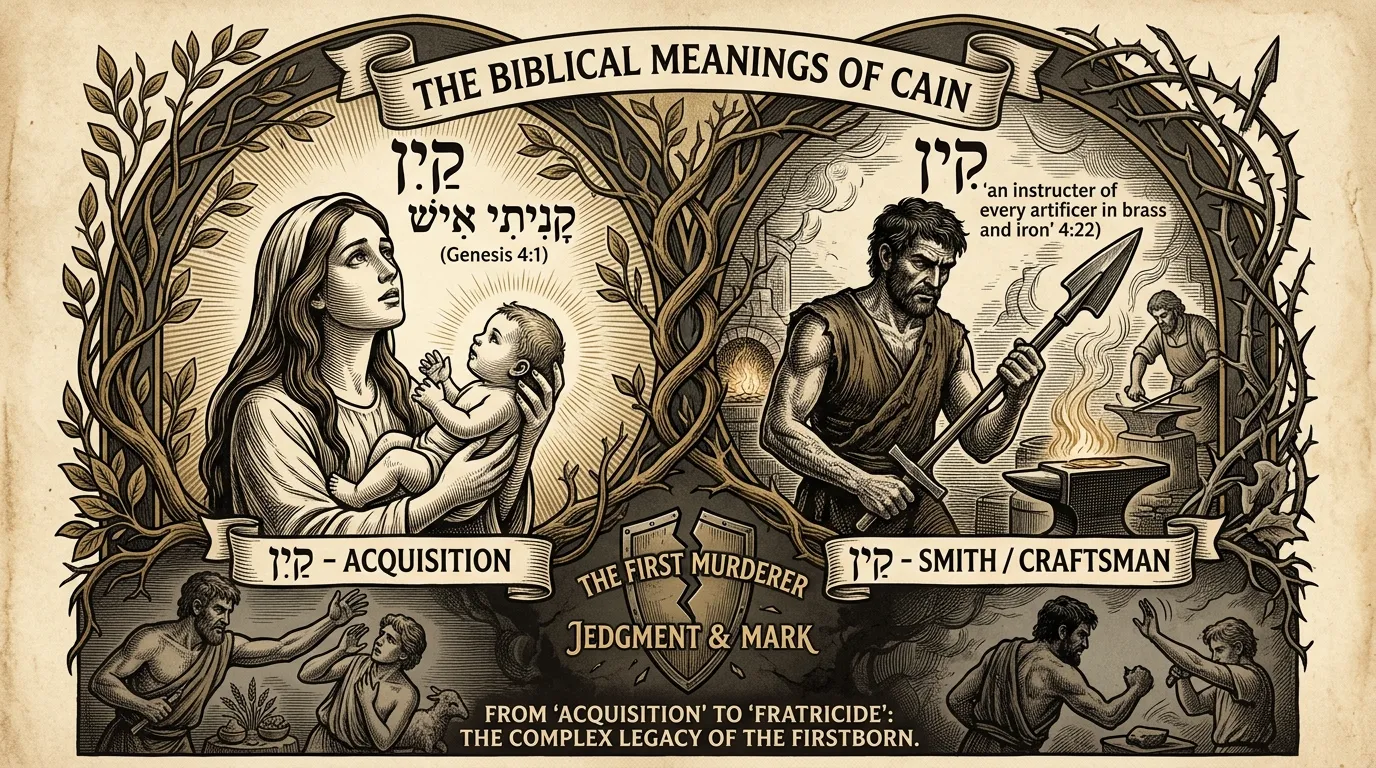
Have you ever read the story of Cain and wondered why his name and story are remembered so strongly in the Bible? Cain is one of the first people named in Scripture.
His story begins with hope, family, and worship, but it later becomes a painful story about jealousy, anger, sin, and choice.
The name Cain appears in Genesis 4. Eve gave birth to Cain and said, “I have gotten a man with the help of the LORD” (Genesis 4:1). His name is commonly connected with the Hebrew word qanah, meaning to acquire, get, or obtain.
Some scholars also note that the exact relationship between the name and the Hebrew word is not completely certain.
Cain is best known as the older brother of Abel. Both brothers brought offerings to God. When God accepted Abel’s offering but did not accept Cain’s, Cain became angry. Instead of dealing with his heart, he allowed anger to grow. His story ended in the murder of Abel.
So, what does Cain meaning in Bible teach us today?
Cain’s story is more than an old family tragedy. It gives a strong lesson about the human heart. It shows how uncontrolled anger can grow into harmful actions, but it also shows that God speaks, warns, and gives people a chance to choose a better path.
Let us look at Cain’s biblical meaning and the spiritual lessons behind his story.
Cain Meaning in Bible
“I have gotten a man with the help of the LORD.” — Genesis 4:1
Eve’s words connect Cain’s birth with receiving or obtaining a child from God. This gives the name a meaningful beginning.
But the story of Cain soon becomes much deeper than the meaning of his name.
Cain and Abel
Cain was a farmer, while his brother Abel was a keeper of sheep. Both brought offerings to the Lord.
Genesis 4:3–5 says that Cain brought an offering from the fruit of the ground, while Abel brought the firstborn of his flock and their fat portions. God had regard for Abel and his offering, but not for Cain and his offering.
The Bible then says:
“So Cain was very angry, and his face fell.” — Genesis 4:5
This moment is important. Cain’s problem was not simply disappointment. His anger began to control him.
God spoke to Cain and warned him:
“Sin is crouching at the door. Its desire is contrary to you, but you must rule over it.” — Genesis 4:7
This verse gives one of the strongest spiritual lessons in Cain’s story.
Sin can begin with a thought, feeling, or temptation. If we allow it to grow, it can lead us toward destructive choices. God warned Cain before the tragedy happened. Cain still had a choice.
Cain and the Danger of Jealousy
He saw that his brother’s offering had been accepted. Instead of examining his own heart, Cain became angry with Abel.
This can happen in everyday life.
Someone else may receive praise while we feel forgotten. Someone may succeed while we struggle. A friend may have something we want. If we are not careful, comparison can create bitterness.
Cain’s story reminds Christians that another person’s blessing does not have to become our pain.
We can bring disappointment to God through prayer instead of allowing it to become hatred.
Cain Kills Abel
Genesis 4:8 tells us that Cain spoke to Abel in the field and then killed him.
When God asked, “Where is Abel your brother?” Cain answered:
“I do not know; am I my brother’s keeper?” — Genesis 4:9
His answer shows another problem: denial and lack of responsibility.
Cain had moved from anger to violence and then tried to avoid responsibility.
The New Testament also remembers Cain as an example of evil action. First John 3:12 says believers should not be like Cain, “who was of the evil one and murdered his brother.”
Cain as a Biblical Warning
The story of Cain carries a serious warning.
It teaches us to watch what happens inside our hearts. Anger that is ignored can become bitterness. Bitterness can affect our choices.
This does not mean every angry feeling makes someone evil. Anger is an emotion. The lesson is about what we do with that emotion.
Cain shows what can happen when a person refuses God’s warning and allows sinful desire to control his actions.
At the same time, God’s warning in Genesis 4:6–7 shows His patience. God spoke to Cain before he committed the murder. Cain was given an opportunity to change his direction.
That makes the story both a warning and a call to repentance, self-control, and obedience.
Spiritual Significance and Symbolism of Cain
The spiritual symbolism of Cain is mainly connected with the human heart and our response to God.
Cain can represent what happens when jealousy, pride, anger, and comparison are allowed to grow.
His story asks us important questions:
- How do I react when someone else succeeds?
- What do I do when God does not answer as I expected?
- Can I accept correction?
- Do I take responsibility for my actions?
- Do I bring my anger to God in prayer?
These questions make Cain’s story personal.
For example, imagine that a coworker receives an opportunity you wanted. You may feel disappointed. That feeling is natural. But you have a choice. You can become bitter, or you can pray, learn, and trust God’s timing.
The same lesson can apply to family, friendships, school, work, and church.
Cain and the Choice Between Sin and Obedience
Genesis 4:7 is central to the spiritual message of Cain.
God warned Cain that sin was waiting at the door, but Cain was told to rule over it.
This teaches an important Christian belief: temptation does not have to control your life.
When anger rises, pause. Pray. Ask God for wisdom. Talk honestly instead of reacting with harm.
Cain’s story also reminds us that worship is not only about an outward action. Our heart matters to God.
Hebrews 11:4 says Abel offered his sacrifice by faith. This points readers toward the importance of faith in approaching God.
The story therefore encourages believers to seek God with a sincere heart rather than focusing only on outward religious actions.
Cain in Dreams or Real-Life Experiences
Some people may dream about Cain, Abel, blood, brothers, conflict, or murder and wonder about the Christian meaning.
The Bible does not give a fixed meaning for every modern dream involving Cain. Therefore, Christians should be careful about saying that such a dream definitely carries a divine message.
If Cain appears in a dream, it may encourage personal reflection about anger, jealousy, conflict, forgiveness, or responsibility. However, the dream should not automatically be treated as a prophecy.
A peaceful dream may simply lead you to reflect on forgiveness or healing. A frightening dream may remind you to pray about fear or conflict.
The safest approach is to compare any spiritual impression with Scripture, pray for wisdom, and avoid making major decisions based only on a dream.
James 1:5 encourages believers to ask God for wisdom.
Your faith should rest on God’s Word, not fear.
Practical Lessons and Faith Insights
Cain’s story gives us several simple lessons:
- Do not feed jealousy.
- Take anger to God before it grows.
- Listen when Scripture corrects you.
- Take responsibility for your choices.
- Do not compare your journey with someone else’s.
- Choose forgiveness and peace when possible.
When your heart feels troubled, stop and pray. Ask God to help you respond with wisdom instead of anger.
Conclusion
The Cain meaning in Bible goes far beyond the meaning of his name. Cain’s story is a powerful reminder that what happens inside our hearts matters deeply to God. His jealousy, anger, and refusal to control his sinful desire led him toward a terrible choice.
Yet before Cain acted, God warned him that sin was waiting at the door. This shows us that God gives us opportunities to stop, listen, change, and choose what is right.
Cain’s life also teaches us not to compare ourselves with others. Abel’s acceptance did not mean Cain had to live in anger. When life feels unfair, we can bring our pain to God instead of allowing bitterness to grow.
When we feel jealous, we can choose gratitude. When we feel angry, we can choose prayer. When we fail, we can choose repentance instead of hiding from God.
The story of Cain is therefore both a warning and an invitation. It warns us about the danger of unchecked sin, but it also encourages us to examine our hearts and seek God’s guidance.
If you have been struggling with anger, comparison, disappointment, or conflict, remember that your feelings do not have to control your actions. Take them to God. Ask Him for wisdom, patience, forgiveness, and a clean heart.
Cain’s story reminds us that every choice matters. With God’s help, we can turn away from bitterness and walk toward love, peace, obedience, and faith. Trust God with your journey, even when you do not understand His timing.

I am James Clear, an author at BibleMeaniing.com. I enjoy writing about biblical wisdom, personal growth, and practical faith. Through my articles, I help readers apply timeless scriptural principles to their daily lives and spiritual journey.