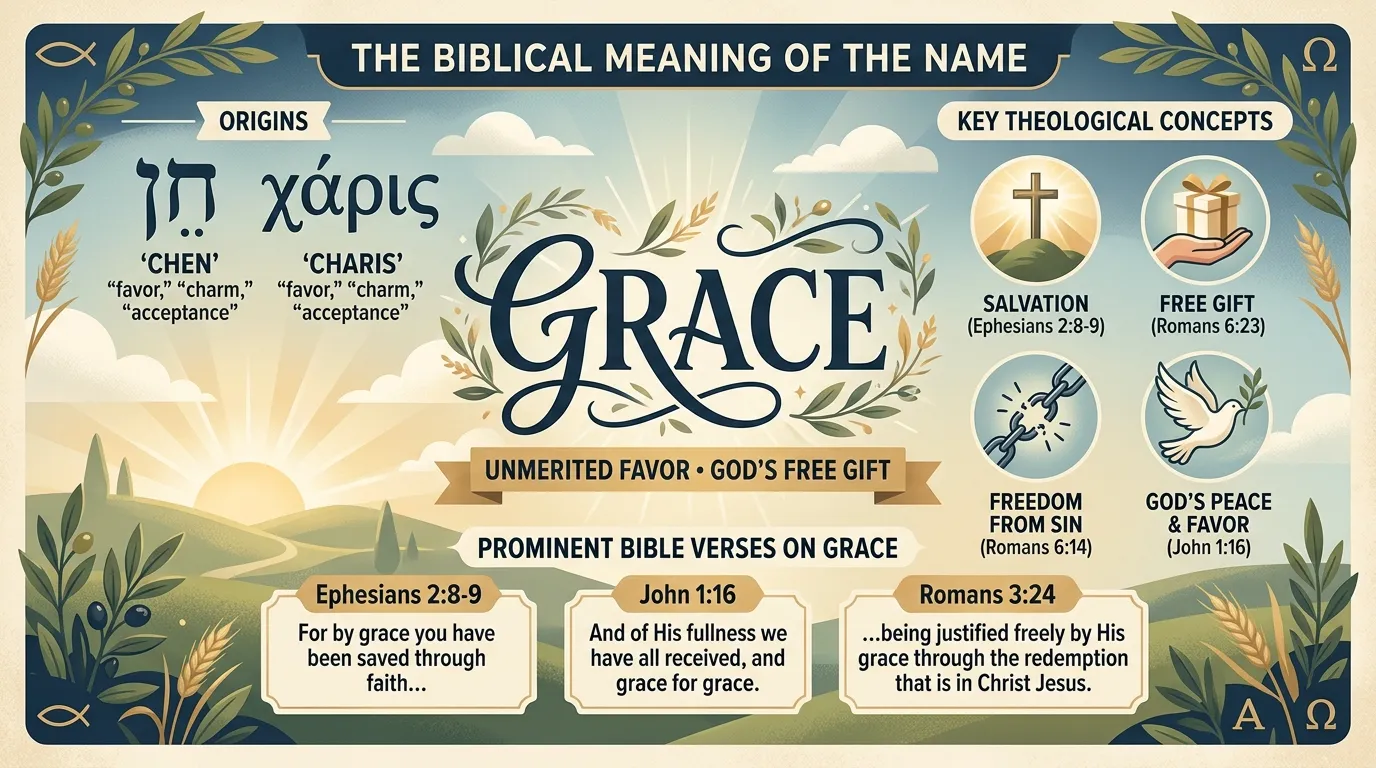
Grace is a beautiful name with a deep meaning in the Bible. It speaks of God’s kindness, favor, mercy, and unearned love. For many Christians, the name Grace is more than a lovely name. It points to the heart of the Christian faith: God gives His love freely, even when we do not deserve it.
Imagine someone feeling lost, tired, or weighed down by mistakes. Then, in the middle of that difficult season, they remember that God has not left them. They pray, and their heart becomes calm. That feeling of undeserved love and help is closely connected to grace.
So, what does the grace name meaning Bible teach us?
The Bible uses the word grace many times to describe God’s goodness toward people. Grace reminds us that we are not saved by our own strength. We depend on God’s love and mercy.
The name Grace carries a message of hope, forgiveness, kindness, and spiritual strength. Let us explore its biblical meaning and what this beautiful name can teach us about our relationship with God.
Biblical Meaning of the Name Grace
The biblical meaning of Grace is closely connected to God’s favor, kindness, mercy, and unearned blessing.
In the New Testament, grace is especially important because it describes God’s gift of salvation through Jesus Christ. Ephesians 2:8 says:
“For by grace you have been saved through faith.”
This verse shows that grace is not something we earn through good works. It is a gift from God received through faith.
Grace Means God’s Unmerited Favor
One of the clearest meanings of grace is unearned favor.
A person may make mistakes, feel weak, or believe they have failed. Yet God can still show love and mercy. Grace reminds us that God’s goodness does not depend on human perfection.
This is why the name Grace can carry such a powerful spiritual message. It says:
You are loved even when you feel unworthy.
Grace does not mean that sin is unimportant. Instead, it shows that God offers forgiveness and a new beginning.
Grace Means God’s Kindness
Grace is also connected with God’s kindness.
Titus 2:11 says:
“For the grace of God has appeared, bringing salvation for all people.”
God’s grace reaches people with kindness and leads them toward a better life.
The name Grace can therefore symbolize a gentle heart. It may remind a person to treat others with patience, forgiveness, and compassion.
When someone chooses kindness instead of anger, forgiveness instead of revenge, and love instead of judgment, they reflect something of God’s grace.
Grace Means Strength in Weakness
Grace is not only about forgiveness. It can also mean strength during difficult times.
In 2 Corinthians 12:9, God tells Paul:
“My grace is sufficient for you, for my power is made perfect in weakness.”
These words offer deep comfort.
There are seasons when we feel unable to move forward. We may face fear, disappointment, loss, or uncertainty. Biblical grace reminds us that we do not have to depend only on our own strength.
God can give strength when our own strength feels small.
Grace and the Presence of God
Grace also points toward God’s loving presence.
John 1:14 describes Jesus as being:
“full of grace and truth.”
This connects grace directly with Jesus Christ. Christian belief teaches that through Jesus, people can experience God’s love, forgiveness, and salvation.
The name Grace can therefore carry a strong Christian meaning: a life touched by God’s love and shaped by His truth.
A Warning About Misunderstanding Grace
Grace should never be understood as permission to continue doing wrong.
Romans 6:1–2 asks whether people should continue in sin because grace is available. The answer is no.
True grace leads to transformation.
When someone understands how deeply God loves them, they are encouraged to live differently. Grace changes the heart. It creates gratitude and a desire to follow God.
Spiritual Significance and Symbolism of Grace
The spiritual symbolism of the name Grace is rich and beautiful.
It can represent forgiveness, hope, mercy, renewal, peace, and God’s favor.
Grace Symbolizes Forgiveness
Everyone makes mistakes. Sometimes people carry guilt from things they wish they could change.
The biblical message of grace says that failure does not have to be the end of the story.
Through repentance and faith, God offers forgiveness.
Psalm 103:12 gives a powerful picture of God’s mercy:
“As far as the east is from the west, so far does he remove our transgressions from us.”
Grace therefore reminds us that God can give us a fresh beginning.
Grace Symbolizes Hope
Grace can also represent hope during hard seasons.
Perhaps you are waiting for an answer to prayer. Maybe life has not turned out as you expected. You may feel uncertain about tomorrow.
Grace reminds you that God is still present.
You do not need to understand everything today. Sometimes faith means trusting God one step at a time.
Grace Represents Spiritual Growth
Grace is not meant to leave us unchanged.
It helps us grow.
A person who receives grace can learn to become more patient, loving, humble, and forgiving. In this way, grace becomes part of a spiritual journey.
For example, someone may once react quickly when hurt. Over time, through prayer and faith, they learn to respond with patience.
That is a picture of spiritual transformation.
Grace Encourages Us to Give Grace
The meaning of Grace is also a reminder to extend kindness to others.
When someone hurts us, forgiveness may be difficult. But remembering God’s grace can help us become more merciful.
This does not mean ignoring harmful behavior. It means choosing a heart that seeks peace, wisdom, and forgiveness rather than hatred.
Grace received from God can become grace shared with others.
Biblical Interpretations of Grace in Dreams or Real Life
If you encounter the name Grace in a dream, during prayer, or in an important moment of life, it may naturally remind you of God’s mercy and favor.
However, the Bible does not teach that every dream or repeated name is automatically a divine message. Christians should test spiritual impressions through Scripture, prayer, wisdom, and faith.
If the name Grace appears during a peaceful moment, you might reflect on God’s peace, kindness, and presence.
If it appears during a difficult season, it may remind you of 2 Corinthians 12:9: God’s grace is sufficient even when you feel weak.
If the name appears while you are struggling with guilt, it can point your heart toward forgiveness and repentance.
If it appears during a season of change, it may remind you that God’s grace can sustain you as you grow.
Rather than becoming afraid, use such moments as an opportunity to pray and seek God through His Word.
Practical Lessons From the Meaning of Grace
The name Grace teaches simple but powerful lessons:
- Trust God when you feel weak.
- Receive His forgiveness with humility.
- Show kindness to others.
- Do not let failure destroy your hope.
- Pray for wisdom before making decisions.
- Allow God’s grace to transform your life.
Grace is not only a word to understand. It is a truth to live.
Conclusion:
The grace name meaning in the Bible carries a beautiful message of God’s love, mercy, kindness, forgiveness, and unearned favor.
Grace reminds us that God does not wait for us to become perfect before He loves us. His grace meets us in our weakness, lifts us when we fall, and gives us strength to begin again.
The name Grace can be a powerful reminder of the heart of the Christian faith. Through Jesus Christ, God offers salvation as a gift.
We cannot earn it by our own strength or good works. Ephesians 2:8 reminds us that we are saved by grace through faith. This truth gives hope to anyone who feels unworthy, broken, afraid, or far from God.
Grace also teaches us how to live. When we understand God’s mercy, we can become more patient with others. When we experience forgiveness, we can learn to forgive.
When God gives us strength during difficult times, we can encourage people who are struggling. In this way, grace becomes more than a name. It becomes a way of life.

I am Adam Grant, an author at BibleMeaniing.com. I focus on sharing insightful Bible-based content that encourages reflection, learning, and personal development. My mission is to help readers discover the relevance of God’s Word in today’s world.