Imagine carrying a heavy backpack every day. At first, it feels light. But over time, it becomes harder and harder to carry. Many people feel this way when they struggle with guilt, regret, or wrong choices. They wonder why some sins seem to leave deeper marks on the heart.
This is where the Bible uses the word iniquity. It is not just another word for sin. It points to something deeper.
It speaks about a heart that has turned away from God’s ways and the lasting effects that follow. When people read the Bible and see the word iniquity, they often ask, “What does it really mean?” They also wonder how it affects their relationship with God.
The good news is that the Bible does not leave us without hope. Along with speaking about iniquity, it also tells the beautiful story of God’s love, mercy, and forgiveness. Through Jesus Christ, even the deepest iniquity can be forgiven.
Let’s explore the meaning of iniquity in the Bible, what Scripture teaches about it, and how God’s grace offers a new beginning.
Biblical Meaning of Iniquity
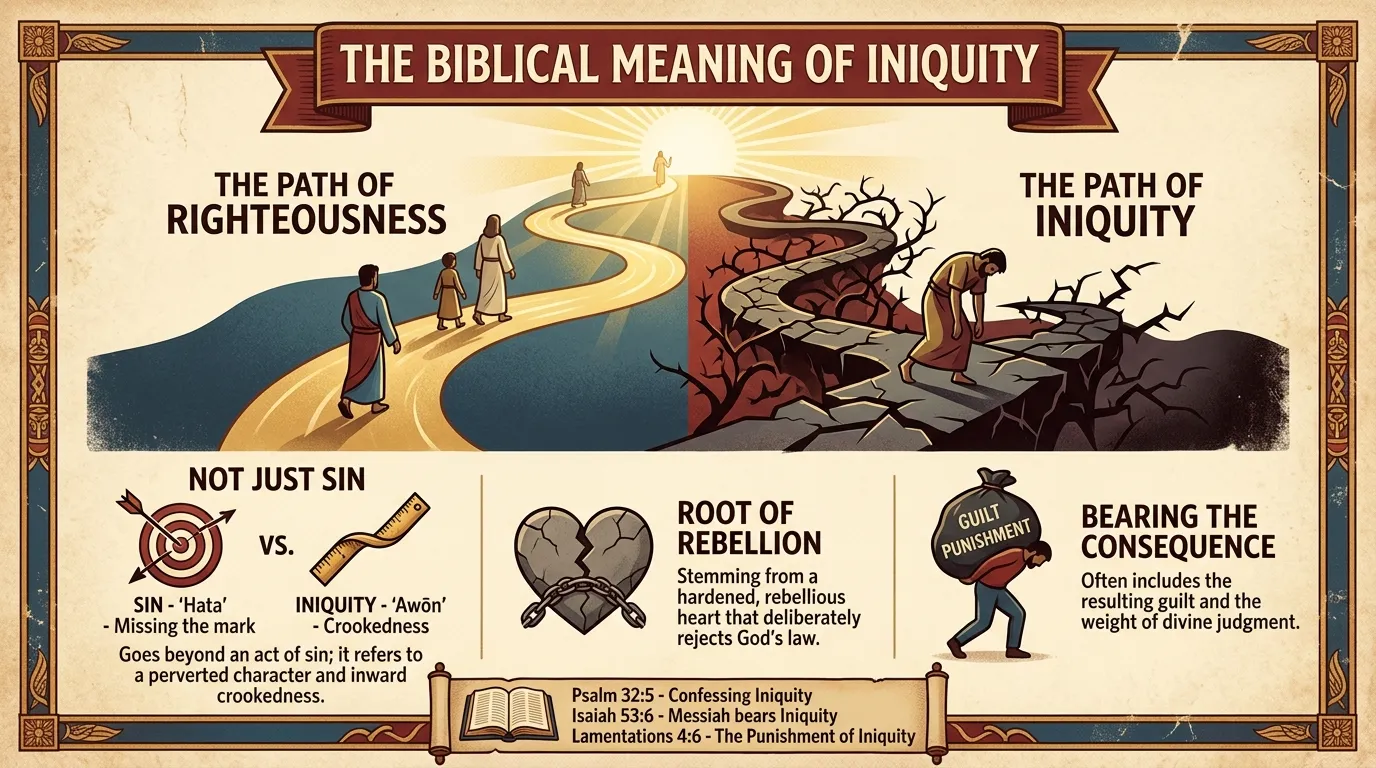
The meaning of iniquity in the Bible goes beyond making a simple mistake. Iniquity describes deep moral wrongness, wickedness, or a twisted heart that chooses its own path instead of God’s.
In the Old Testament, the Hebrew word often translated as iniquity is “avon,” which carries the idea of guilt, corruption, and the consequences of sin. It shows that sin can shape a person’s heart if it is left unchecked.
Unlike an accidental mistake, iniquity often points to deliberate disobedience. It is a pattern of turning away from God’s truth.
Bible Verses About Iniquity
One of the best-known verses is:
“For I will forgive their wickedness and will remember their sins no more.”
— Jeremiah 31:34 (NIV)
This verse reminds us that although iniquity is serious, God’s forgiveness is even greater.
Another important passage is:
“If we confess our sins, he is faithful and just and will forgive us our sins and purify us from all unrighteousness.”
— 1 John 1:9 (NIV)
God invites everyone to come to Him with an honest heart.
Iniquity, Sin, and Transgression
The Bible often uses three related words:
- Sin means missing God’s perfect standard.
- Transgression means knowingly breaking God’s law.
- Iniquity speaks of the inner corruption that leads people away from God.
These words are connected, but each reveals a different part of humanity’s need for God’s grace.
The Warning About Iniquity
The Bible warns that iniquity can grow if people ignore God’s voice.
Isaiah wrote:
“Your iniquities have separated you from your God.”
— Isaiah 59:2 (NIV)
This does not mean God stops loving people. Instead, iniquity creates a barrier in our relationship with Him because it pulls our hearts away from His presence.
David understood this after his own failures. In Psalm 51, he prayed for mercy and asked God to create a clean heart within him. His story reminds us that repentance opens the door to restoration.
God’s Mercy Is Greater
One of the strongest messages in the Bible is that God’s mercy is bigger than human failure.
Isaiah gives this wonderful promise:
“Though your sins are like scarlet, they shall be as white as snow.”
— Isaiah 1:18 (NIV)
Jesus fulfilled this promise through His death and resurrection. He carried humanity’s sins so that everyone who believes in Him can receive forgiveness.
This is why the Christian meaning of iniquity is not only about judgment. It is also about redemption, hope, and new life.
Spiritual Significance and Symbolism
The spiritual symbolism of iniquity teaches us about the condition of the human heart. It reminds believers that everyone needs God’s grace.
Many people try to hide their mistakes. They may smile on the outside while carrying pain inside. The Bible invites us to do something different. It encourages us to bring our struggles into God’s light through prayer, confession, and faith.
When we confess our sins, God does not push us away. Instead, He welcomes us with love.
The story of the Prodigal Son in Luke 15 is a beautiful picture of this truth. The son walked away from his father and made many wrong choices. Yet when he returned with a humble heart, his father welcomed him home with joy.
This story reflects God’s heart toward those who repent.
Iniquity also reminds Christians to stay close to God every day. Reading Scripture, praying, and following Jesus help believers grow stronger in faith and resist temptation.
Rather than living in fear, Christians can live with hope, knowing that God’s grace is always available.
Biblical Interpretations in Dreams or Real Life
Some people search for the meaning of iniquity in the Bible after reading the word in a dream, hearing it during prayer, or noticing it repeatedly while reading Scripture.
In a dream, the word iniquity may encourage personal reflection. It is not always a sign that someone has committed a great sin. Instead, it can be a gentle reminder to examine the heart and seek God’s guidance.
If the dream feels peaceful, it may point toward healing, forgiveness, and spiritual renewal. God may be inviting the dreamer into a closer relationship with Him.
If the dream feels fearful or troubling, it can serve as a loving warning to turn away from harmful choices and return to God’s path.
In real life, reading about iniquity often inspires believers to pray, ask for wisdom, and trust the Holy Spirit’s guidance.
Rather than creating fear, these moments can become opportunities for spiritual awakening and deeper faith.
Practical Lessons & Faith Insights
The Bible teaches that no one is beyond God’s mercy.
When you think about iniquity, remember these simple truths:
- Confess your sins honestly to God.
- Trust in Jesus for forgiveness.
- Read God’s Word every day.
- Pray for wisdom and strength.
- Walk in faith instead of guilt.
God delights in restoring hearts that seek Him with sincerity.
Conclusion
Understanding the meaning of iniquity in the Bible provides a deeper perspective on God’s view of sin and humanity’s need for forgiveness. Unlike ordinary mistakes, iniquity often describes a settled condition of the heart a pattern of rebellion and moral corruption that distances people from God’s holiness.
The Bible consistently teaches that while iniquity carries serious spiritual consequences, God’s mercy is greater than any sin for those who sincerely repent and place their faith in Him.
From the writings of Moses and the prophets to the teachings of Jesus and the apostles, Scripture presents a consistent message: God desires transformation rather than condemnation.
Through Jesus Christ, believers are offered complete forgiveness, restoration, and freedom from the burden of iniquity. By understanding this biblical truth and applying it to daily life, Christians can grow in faith, pursue righteousness, and develop a closer relationship with God.
Ultimately, the meaning of iniquity in the Bible points not only to humanity’s brokenness but also to the incredible hope found in God’s grace and redemption.

I am James Clear, an author at BibleMeaniing.com. I enjoy writing about biblical wisdom, personal growth, and practical faith. Through my articles, I help readers apply timeless scriptural principles to their daily lives and spiritual journey.