Have you ever wondered why some names in the Bible carry such deep meaning? The name Jacob is one of those names. At first, it may seem like just another Bible name. But when you look closer, you find a story filled with struggle, hope, mistakes, and God’s amazing grace.
Jacob was not perfect. He made wrong choices and faced many hard days. Yet God never gave up on him. Instead, God used his life to show that people can change when they trust Him.
That is why many Christians search for the meaning of Jacob in the Bible. They want to know what his name teaches about faith, God’s promises, and personal transformation.
Jacob’s journey reminds us that God often works through ordinary people with real struggles. His life shows that failure does not stop God’s plan. Through faith, prayer, and God’s mercy, a person can become someone new.
So, what does Jacob’s name really mean? And what spiritual message does his life hold for Christians today? Let’s explore the Bible and discover the powerful lessons behind Jacob’s story.
Biblical Meaning of Jacob in the Bible
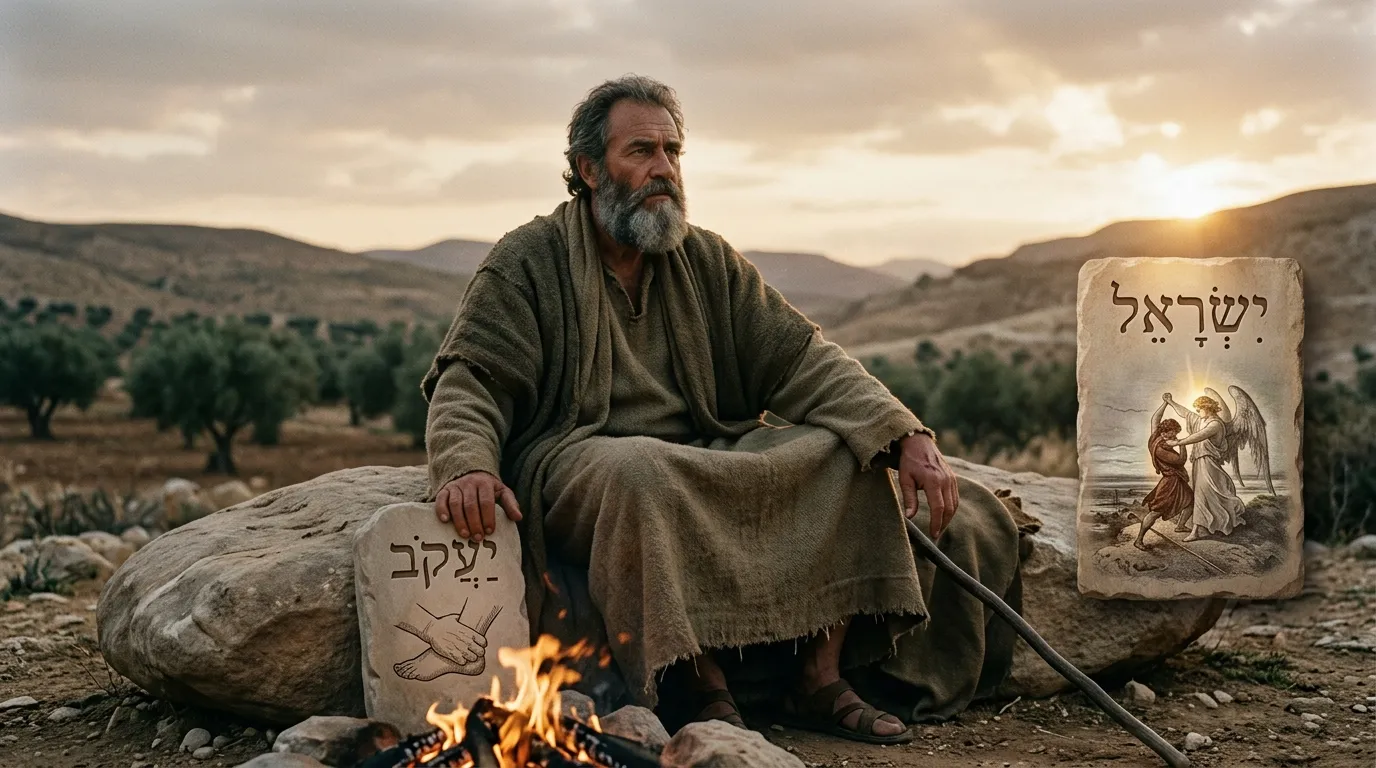
The meaning of Jacob in the Bible begins with his name. In Hebrew, Jacob (Ya’aqov) is often understood to mean “he grasps the heel” or “supplanter.” This comes from the moment of his birth.
Jacob’s Birth
In Genesis 25:24–26, Jacob was born holding the heel of his twin brother, Esau. This unusual birth became a picture of his early life. Jacob often struggled to gain what belonged to his brother.
The Bible says:
“Afterward his brother came out, with his hand holding Esau’s heel; so his name was called Jacob.” Genesis 25:26 (ESV)
His name reflected someone who would strive and wrestle through life.
Jacob’s Early Life
Jacob is known for receiving Esau’s birthright and later gaining his father’s blessing.
- He bought Esau’s birthright when Esau was hungry (Genesis 25:29–34).
- With help from his mother Rebekah, he received Isaac’s blessing (Genesis 27).
These events show that Jacob relied too much on his own plans instead of waiting for God’s timing.
This part of Jacob’s life serves as a warning. The Bible teaches us that trying to force God’s promises through dishonest actions brings pain and broken relationships.
God’s Faithfulness Never Changed
Even though Jacob made mistakes, God remained faithful.
One night, while running away from Esau, Jacob slept in the wilderness. There he dreamed of a ladder reaching from earth to heaven with angels going up and down.
God spoke to him, saying:
“I am the Lord… I am with you and will watch over you wherever you go.” Genesis 28:13–15
This dream became a powerful sign of God’s presence, guidance, and promise.
It reminds Christians that God stays with His people even when they have failed.
Jacob Wrestles with God
One of the most important moments in Jacob’s life happened before he met Esau again.
In Genesis 32:22–32, Jacob wrestled with a mysterious man through the night. The Bible later reveals this was a divine encounter.
Jacob refused to let go until he received a blessing.
Then God changed his name.
“Your name shall no longer be called Jacob, but Israel, for you have striven with God and with men, and have prevailed.” Genesis 32:28
This was a turning point.
Jacob, the “supplanter,” became Israel, meaning one who struggles with God or God prevails.
His new name symbolized a new life, a changed heart, and a deeper relationship with God.
A Message of Hope
The story of Jacob is full of hope.
His life teaches that:
- God’s grace is greater than our failures.
- Faith grows through difficult seasons.
- God keeps His promises even when people are imperfect.
- Transformation comes through surrender to God.
This is one of the strongest examples of biblical symbolism in Scripture. Jacob’s life points to God’s power to change hearts.
Spiritual Significance and Symbolism
The meaning of Jacob in the Bible is not only about one man. It also speaks to every believer today.
Jacob’s story is a picture of spiritual transformation.
Many people begin their faith journey carrying fear, pride, or past mistakes. Like Jacob, they may try to solve problems on their own. But God invites them to trust Him instead.
Jacob’s life also teaches the value of prayer.
When he feared meeting Esau again, Jacob prayed with honesty. He admitted his weakness and asked for God’s help (Genesis 32:9–12).
His story reminds Christians that real strength comes from depending on God.
Another important symbol is God’s promise.
Jacob received God’s covenant first given to Abraham and Isaac. Through Jacob’s family came the twelve leagues of Israel, and many years later, Jesus Christ entered the world through this family line.
This shows that God’s plan continues across generations.
Today, believers can remember that God still gives hope, guidance, and a divine message to those who seek Him.
Even when life feels uncertain, God’s promises remain true.
Biblical Interpretations in Dreams or Real Life
Some people dream about Jacob, ladders, wrestling, or the name Israel. Others simply read his story during a difficult season.
From a Christian view, these experiences should always be understood through Scripture and prayer rather than treated as certain predictions.
A peaceful dream about Jacob may remind someone that God is leading them through change or calling them to trust His promises.
A dream about wrestling could reflect an inner struggle, a season of spiritual growth, or a need to surrender something to God.
Seeing a ladder, like Jacob’s dream, may symbolize God’s presence, open communication with Him, or hope during difficult times.
If the dream feels fearful, it may simply encourage deeper prayer, honest self-examination, and renewed trust in God rather than fear.
The Bible encourages believers to seek wisdom, pray, and compare every experience with God’s Word.
Practical Lessons & Faith Insights
Jacob’s story offers simple but powerful lessons:
- Trust God’s timing instead of forcing your own plans.
- Bring your struggles to God in prayer.
- Believe that God can transform your life.
- Remember that God’s grace is stronger than your past.
- Walk forward in faith, knowing God keeps His promises.
Every step of Jacob’s journey points believers back to God’s faithful love.
Conclusion
The meaning of Jacob in the Bible represents much more than a simple name it tells the story of transformation, perseverance, and God’s unfailing covenant. Although Jacob’s name is commonly understood to mean “heel holder” or “supplanter,” his life reveals that God can reshape both character and destiny.
Through faith, hardship, and divine encounters, Jacob grew into the man God called Israel, becoming the father of a nation chosen to fulfill God’s promises.
Jacob’s journey reminds believers that spiritual growth often comes through challenges rather than comfort. His experiences teach the importance of trusting God, seeking His blessing, repenting after failure, and remaining faithful even during difficult seasons.
His transformation from Jacob to Israel serves as a timeless reminder that God is able to give His people a new identity and a greater purpose.
Whether you’re studying biblical names, exploring Old Testament history, or searching for spiritual encouragement, understanding the meaning of Jacob in the Bible offers valuable insight into God’s faithfulness, redemption, and everlasting promises that continue to inspire believers today.

I am Brandon Sanderson, an author at BibleMeaniing.com. I love exploring the deeper meanings of Scripture and presenting biblical concepts in a clear and engaging way. My writing aims to inspire faith, understanding, and spiritual growth.