Imagine someone gives you a beautiful garden and asks you to care for it. The garden does not truly belong to you, but you are trusted to water the plants, remove the weeds, and help it grow.
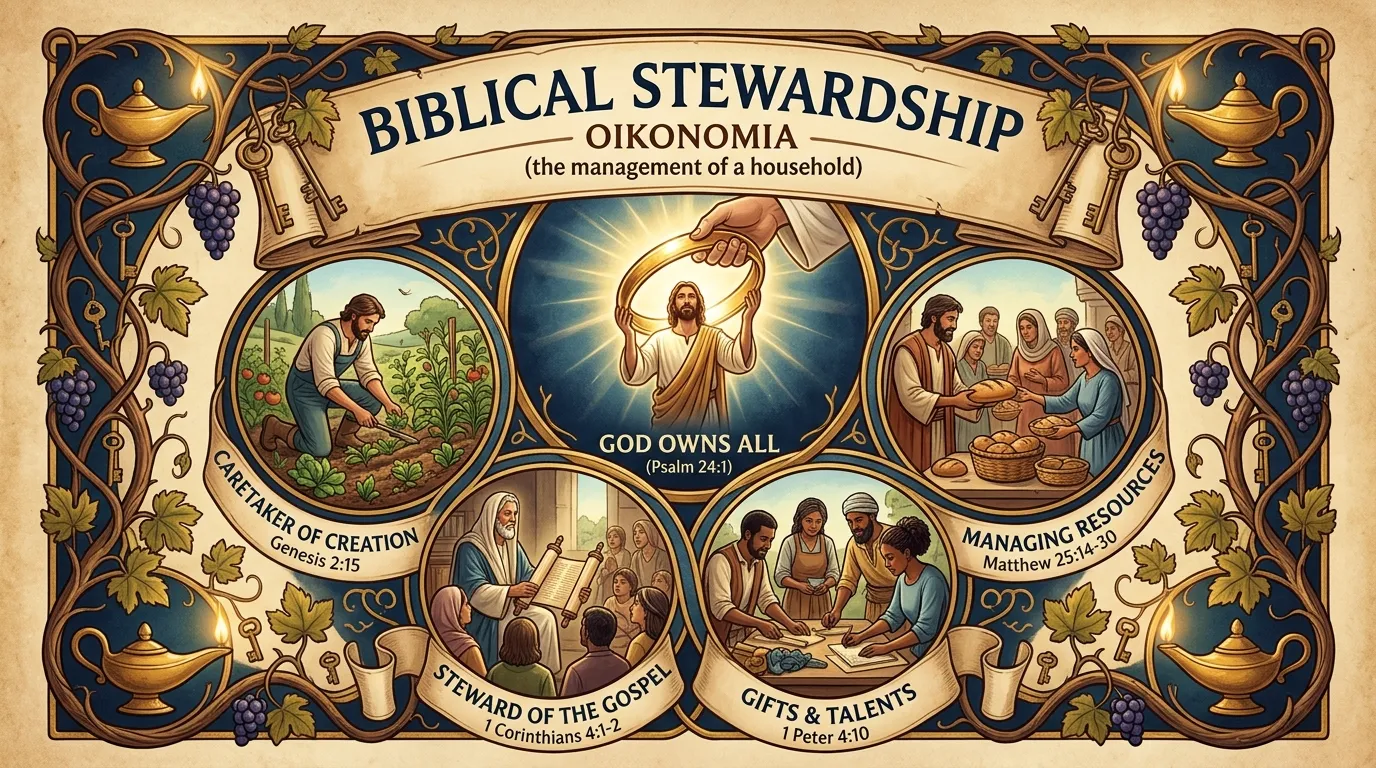
This picture helps us understand stewardship meaning in the Bible.
Biblical stewardship is more than managing money. It is about caring for everything God has placed in our hands. This can include our time, talents, relationships, possessions, work, opportunities, and even the world around us.
The Bible teaches that God is the true owner of all things. We are called to be faithful managers of what He gives us.
This idea can change the way we see everyday life. A job can become an opportunity to serve. Money can become a way to help others. A talent can become a gift used for God’s glory.
But what exactly does stewardship mean in the Bible? What does Scripture teach about being a good steward? And how can this biblical idea shape our faith and daily choices?
Let us explore the deeper meaning of biblical stewardship and the spiritual lessons it offers.
Biblical Meaning of Stewardship in the Bible
The basic Christian meaning of stewardship is faithfully managing what belongs to God.
A steward is someone who receives responsibility for something that belongs to another person. In the Bible, God is the owner, while we are His stewards.
Psalm 24:1 gives us a clear foundation:
“The earth is the LORD’S, and the fulness thereof; the world, and they that dwell therein.”
This verse reminds us that everything ultimately belongs to God. Our possessions, abilities, time, and opportunities are gifts entrusted to us.
Stewardship Begins With God as the Owner
The first lesson of stewardship is simple: God owns everything.
When we understand this, our attitude changes. Instead of thinking, “Everything I have is mine,” we begin to ask, “How can I use what God has given me wisely?”
This does not mean Christians cannot enjoy their blessings. Rather, it means they should use those blessings with gratitude and responsibility.
Your home, education, income, skills, health, relationships, and time can all become areas of stewardship.
Stewardship of Money
Money is one of the most common areas connected with biblical stewardship.
Jesus spoke often about money because the way we handle it can reveal what is important in our hearts. In Matthew 6:21, Jesus says:
“For where your treasure is, there will your heart be also.”
Biblical stewardship encourages wise and generous use of money. It teaches us not to make wealth our master.
This can mean caring for family, helping people in need, supporting God’s work, avoiding waste, and making wise financial choices.
The goal is not simply to have more money. The goal is to use what we have faithfully.
Stewardship of Time
Time is also a gift from God.
We cannot store tomorrow’s hours or recover yesterday’s moments. This makes time one of our most valuable resources.
Ephesians 5:15–16 encourages believers to live wisely and “redeem the time.”
Good stewardship of time may include prayer, serving others, caring for family, doing honest work, learning, resting, and making room for God.
Even small moments can have great value when they are used with purpose.
Stewardship of Talents and Gifts
God gives people different abilities.
Some can teach. Others can encourage, create, lead, serve, listen, build, organize, or care for people.
1 Peter 4:10 teaches:
“As every man hath received the gift, even so minister the same one to another.”
Your gift is not only for personal success. It can also bless others.
This is an important part of spiritual stewardship. God may place a talent in your hands because someone else needs what you can offer.
The Parable of the Talents
One of the clearest biblical examples of stewardship is found in Matthew 25:14–30.
Jesus tells a story about a master who gives different amounts of money to three servants. Two servants use what they receive and produce more. One servant hides what he was given.
When the master returns, he praises the faithful servants.
The lesson is powerful: God cares about faithfulness.
We may not have the same gifts, money, or opportunities as other people. That is not the main issue. What matters is how faithfully we use what God has placed in our hands.
Stewardship Is Also a Warning
Biblical stewardship carries a warning as well as encouragement.
Luke 16:10 says:
“He that is faithful in that which is least is faithful also in much.”
Small responsibilities matter.
How we treat a little money, a little time, a small opportunity, or a simple task can reveal our character.
Stewardship teaches us not to waste what God has given us or treat His blessings carelessly.
Spiritual Significance and Symbolism of Stewardship
The spiritual symbolism of stewardship points to trust, responsibility, gratitude, and faithfulness.
When God gives us something to manage, He is giving us an opportunity to grow.
Stewardship Teaches Gratitude
A steward understands that blessings are gifts.
Instead of taking everything for granted, we learn to say, “Thank You, God, for what You have placed in my hands.”
This can create a heart of gratitude.
Even ordinary things can become meaningful when we see them as gifts from God.
Stewardship Builds Faith
Sometimes God asks us to be faithful before we see the result.
These moments can strengthen faith.
Stewardship reminds us that our responsibility is faithfulness. The results are ultimately in God’s hands.
Stewardship Leads to Transformation
True stewardship can change the way we live.
A person may begin to spend less on selfish desires and more on meaningful needs. Someone may stop hiding a talent and start using it to encourage others. Another person may begin using time more wisely.
These small changes can become part of a deeper spiritual awakening.
Stewardship asks an important question:
“What can I do with what God has given me?”
That question can lead to a life of purpose.
Biblical Interpretations in Dreams or Real Life
People sometimes encounter the idea of stewardship in dreams, prayer, or personal experiences. They may dream about caring for a house, garden, animals, money, children, land, or valuable objects.
These images can encourage personal reflection about responsibility and trust.
However, the Bible does not teach that every dream has a fixed symbolic meaning. Christians should be careful about claiming that every dream is a direct divine message.
Instead, compare the experience with Scripture and bring it to God in prayer.
A peaceful dream about caring for something may encourage thoughts about responsibility, growth, or faithful service. A stressful dream about losing something may lead you to reflect on fear, worry, or areas of life that need greater care.
The safest foundation is always God’s Word.
James 1:5 reminds believers that those who need wisdom should ask God.
So, rather than becoming afraid of a dream, use it as an opportunity to pray, reflect, and seek God’s guidance.
Practical Lessons and Faith Insights
Biblical stewardship can become part of everyday Christian life.
- Thank God for what you have.
- Use your time wisely.
- Develop your God-given gifts.
- Handle money responsibly.
- Care for people and creation.
- Serve without always seeking praise.
- Trust God with the results.
Remember, stewardship is not about having a lot. It is about being faithful with what you have.
Conclusion:
The stewardship meaning in the Bible teaches us that everything we have is a gift from God and should be handled with care, wisdom, and gratitude. Our time, money, talents, relationships, opportunities, and possessions are not simply things for our own use.
They are responsibilities that God has trusted us to manage.
Biblical stewardship reminds us that faithfulness matters more than how much we have. A person with little can be a faithful steward, just as a person with much can fail to use their blessings wisely.
God looks at the heart and at how we respond to what He has placed in our hands.
When we practice good stewardship, we learn to live with greater purpose. We become more thankful for our blessings, more careful with our choices, more willing to help others, and more aware of God’s presence in everyday life.
Even a simple act of kindness, an hour spent helping someone, a talent used to encourage another person, or money given to someone in need can become an expression of faithful service.

I am Brandon Sanderson, an author at BibleMeaniing.com. I love exploring the deeper meanings of Scripture and presenting biblical concepts in a clear and engaging way. My writing aims to inspire faith, understanding, and spiritual growth.