Have you ever made a mistake and wished you could go back and make things right? Most of us know that feeling. We hurt someone, regret our choice, or feel far from God because of sin. Then we wonder, Can I be forgiven? Can my relationship with God be restored?
This is where the Bible gives us a beautiful word: atonement.
The atonement meaning Bible teaches us about forgiveness, reconciliation, sacrifice, and God’s great plan to bring people back to Himself. Atonement is not simply about covering a mistake. It points to God dealing with sin so that people can have peace with Him.
In the Old Testament, God gave His people instructions about sacrifices and offerings for sin. These acts pointed toward something greater. They helped people understand the seriousness of sin and their need for God’s mercy.
In the New Testament, this message becomes even clearer through Jesus Christ. His sacrifice on the cross is at the heart of Christian faith. Jesus gave Himself for sinners and opened the way for people to be reconciled with God.
So, what does atonement mean in the Bible? It means reconciliation with God through His gracious plan to deal with sin, ultimately fulfilled through Jesus Christ.
Let’s look deeper at this powerful biblical meaning.
Biblical Meaning of Atonement
The biblical meaning of atonement is closely connected with sin, forgiveness, sacrifice, reconciliation, and restoration.
In simple words, atonement means that the problem of sin is dealt with so that a broken relationship with God can be restored.
Atonement in the Old Testament
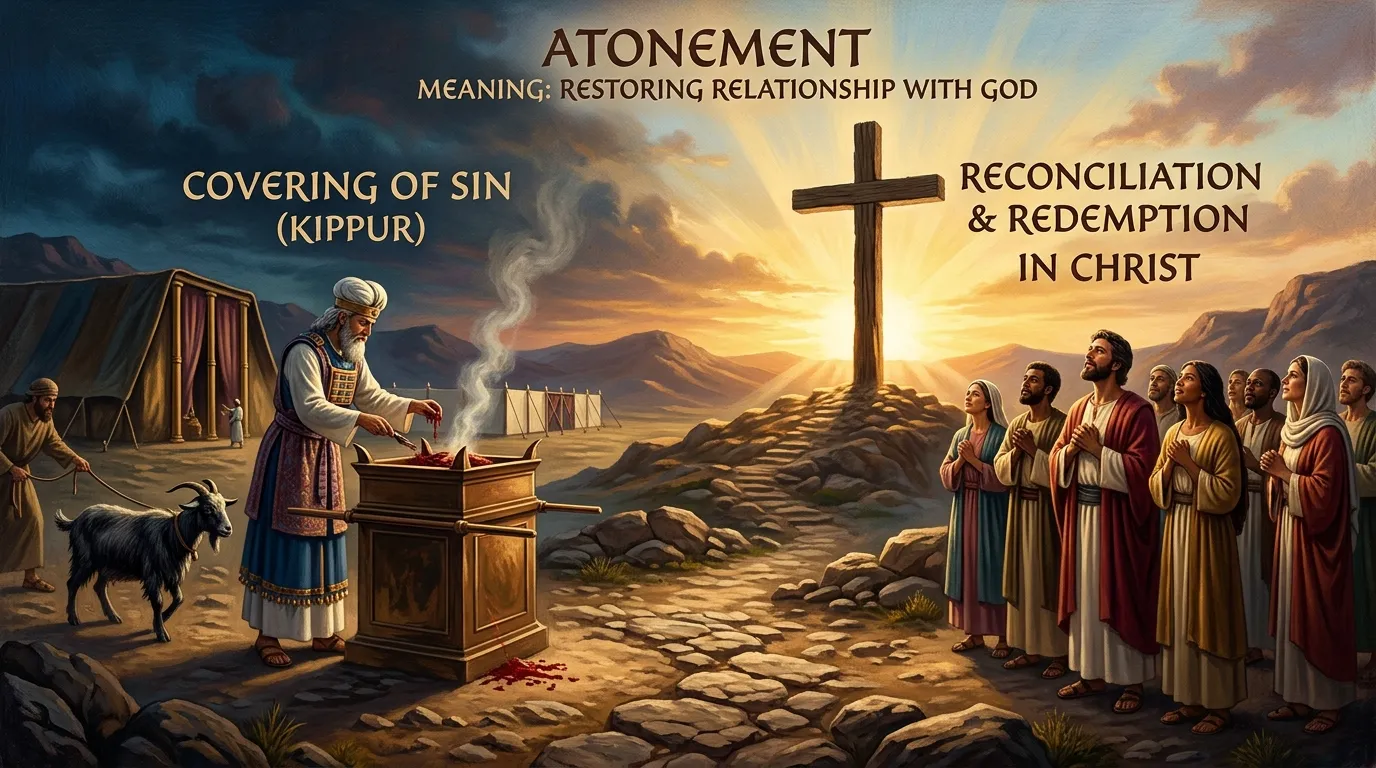
The Old Testament contains many teachings about sacrifices for sin. One important example is the Day of Atonement, described in Leviticus 16.
On this special day, the high priest entered the Most Holy Place and offered sacrifices for the sins of the people. It was a serious and holy event.
Leviticus 17:11 says:
“For the life of the flesh is in the blood… and I have given it for you upon the altar to make atonement for your souls.”
This verse shows the seriousness of sin and the need for cleansing and forgiveness.
The sacrifices of the Old Testament were not the final answer. They pointed forward to the greater work God would accomplish through Christ.
Jesus and the Fulfillment Meaning of Atonement
For Christians, the deepest meaning of atonement is found in Jesus Christ.
Jesus came to give His life for sinners. His death on the cross was not an accident. It was part of God’s plan of salvation.
Romans 3:23–24 teaches:
“For all have sinned, and come short of the glory of God; being justified freely by his grace through the redemption that is in Christ Jesus.”
This gives a message of hope. Everyone has sinned, but God offers grace.
First John 2:2 also says that Jesus is the atoning sacrifice for our sins.
This means Christians do not have to live forever under guilt and fear. Through faith in Christ, they can receive forgiveness and a restored relationship with God.
Meaning of Atonement Shows God’s Love
Atonement is also a powerful picture of God’s love.
John 3:16 reminds us that God loved the world so much that He gave His only Son. The cross shows how seriously God takes sin, but it also shows how deeply He loves people.
The message is not simply, “You have failed.”
The message is also, “God has made a way back.”
That can bring comfort to anyone who feels ashamed, broken, or spiritually distant.
Atonement and Reconciliation
Atonement is closely linked with reconciliation.
Second Corinthians 5:18 says that God reconciled us to Himself through Christ.
Imagine two people who were separated because of a serious problem. Reconciliation means the relationship is restored.
In a similar way, sin separates people from God. Through Christ, God offers a path toward restored fellowship.
This is one of the most beautiful parts of the Christian message: God does not simply point out our brokenness; He offers restoration.
Spiritual Significance and Symbolism Meaning of Atonement
The spiritual symbolism of atonement reaches into everyday Christian life.
Atonement Represents Forgiveness
Atonement reminds believers that God’s forgiveness is real.
When a person confesses sin and turns toward God, they do not need to remain trapped in yesterday’s mistakes.
Psalm 103:12 gives a powerful picture:
“As far as the east is from the west, so far hath he removed our transgressions from us.”
This does not mean sin is unimportant. Instead, it shows the greatness of God’s mercy.
Atonement Represents Transformation
Atonement is not only about being forgiven. It also points toward transformation.
When someone understands what Christ has done, their heart can begin to change. They may become more loving, humble, patient, and willing to forgive others.
For example, imagine someone who has carried guilt for years. Through prayer and faith, they begin to understand God’s grace. They stop running from God and start seeking Him.
That is part of spiritual growth.
Atonement Brings Hope
Atonement gives hope because our relationship with God does not depend on being perfect.
Christians still make mistakes. But the gospel teaches them to return to God, confess their sins, and trust His grace.
Romans 5:8 says:
“But God commendeth his love toward us, in that, while we were yet sinners, Christ died for us.”
These words can bring peace to a troubled heart.
The cross tells believers that God’s love reaches people even in their brokenness.
Biblical Interpretations Meaning of Atonement in Dreams or Real Life
If you encounter the word atonement in a dream, during prayer, or while reading Scripture, it may lead you to think about forgiveness, reconciliation, repentance, or spiritual renewal.
However, the Bible does not teach that every dream contains a direct message from God. Dreams should be approached carefully and tested against Scripture.
A peaceful experience involving atonement may remind you of God’s forgiveness and grace.
If the experience brings feelings of guilt or fear, it may encourage you to examine your heart, pray, and seek God’s direction rather than remaining trapped in shame.
If you dream about a sacrifice, cross, cleansing, or being restored to someone, these images may naturally connect with biblical ideas of atonement and reconciliation. Still, personal dream interpretation should never replace Scripture.
The safest response is simple: pray, read God’s Word, and seek wisdom.
God’s message of salvation through Christ remains clear, even when our dreams and emotions are not.
Practical Lessons and Faith Insights Meaning of Atonement
The meaning of atonement gives Christians several important lessons:
- Trust God’s forgiveness.
- Take sin seriously, but do not live in hopelessness.
- Return to God through prayer and repentance.
- Forgive others when possible.
- Remember Christ’s sacrifice with gratitude.
- Trust God’s grace when you feel weak.
Atonement reminds us that our failures do not have to be the end of our story.
Conclusion
The atonement meaning in the Bible points to one of the most powerful messages of Christian faith: God offers forgiveness, restoration, and hope through Jesus Christ. Atonement shows that sin is serious, but God’s mercy is greater.
The sacrifices in the Old Testament helped people understand the need for cleansing and forgiveness, while the sacrifice of Jesus revealed the complete plan of redemption.
Through Christ, believers can find peace with God and receive a new beginning. Atonement is not only about removing guilt; it is about restoring a broken relationship and bringing people closer to the presence of God.
It reminds us that we do not have to remain trapped by our past mistakes.
When you feel ashamed, distant, or spiritually weak, remember the message of the cross. God’s grace gives you a reason to hope, pray, grow, and begin again. Let the biblical meaning of atonement encourage you to trust God’s forgiveness and follow Him with a renewed heart.

I am Colleen Hoover, an author at BibleMeaniing.com. I am passionate about exploring biblical teachings and sharing meaningful insights that help readers understand Scripture more deeply. My goal is to make God’s Word relatable and inspiring for everyday life.