Imagine walking through a dry land under the hot sun. Water is hard to find. Then you come across a cistern a deep pit made to hold rainwater. For the people of Bible times, a cistern was more than a hole in the ground. It was often the difference between life and death.
When you read about a cistern in the Bible, you may wonder, “What does a cistern mean in the Bible?” Is it simply a place to store water, or does it carry a deeper spiritual message?
The Bible uses everyday things to teach powerful truths. A cistern is one of those images. Sometimes it stands for God’s blessings and provision. Other times it warns people about trusting the wrong things instead of trusting God. It also appears in stories of suffering, rescue, and hope.
Whether you noticed the word while reading Scripture, dreamed about a cistern, or simply became curious about its meaning, the Bible offers rich insight. Understanding its symbolism can help you grow in faith and see how God speaks through familiar images.
Let’s explore the cistern meaning in the Bible, the verses that mention it, and the spiritual lessons it still teaches believers today.
Biblical Meaning of Cistern Meaning in the Bible
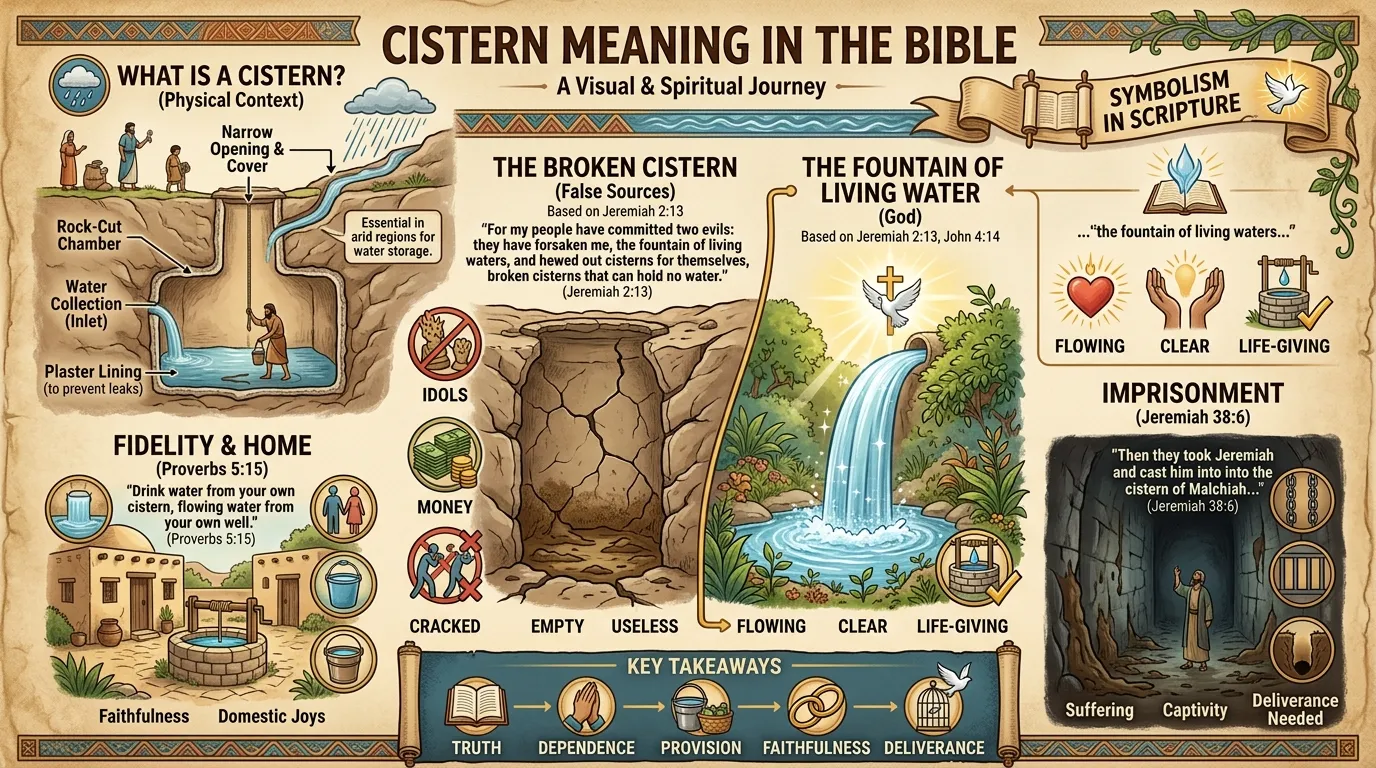
A cistern is a synthetic underground container that stores rainwater. In the ancient Middle East, where water was precious, cisterns helped families survive long dry seasons. Because of this, water stored in a cistern often became a symbol of life, blessing, and God’s provision.
A Symbol of God’s Provision
Water is one of the strongest symbols of life in Scripture. A full cistern reminded people that God had provided what they needed.
Proverbs 5:15 says:
“Drink water from your own cistern, running water from your own well.”
This verse teaches faithfulness and contentment. Instead of looking elsewhere, God’s people are encouraged to appreciate the blessings He has already given them.
The image reminds Christians to value God’s gifts instead of always chasing something new.
A Warning Against Trusting the Wrong Source
One of the strongest lessons about cisterns comes from Jeremiah 2:13:
“My people have committed two sins: They have forsaken me, the spring of living water, and have dug their own cisterns, broken cisterns that cannot hold water.”
Here, God compares Himself to living water, while broken cisterns represent human efforts that cannot truly satisfy the heart.
This powerful biblical symbolism teaches that success, money, power, or pleasure cannot replace a relationship with God. Only He can fill the deepest needs of the soul.
A Place of Suffering and Waiting
Cisterns also appear as places of hardship.
In Genesis 37:24, Joseph’s brothers threw him into an empty cistern before selling him into slavery.
Although Joseph suffered, God never abandoned him. Years later, Joseph became a ruler in Egypt and saved many lives during famine.
This story shows that difficult seasons do not mean God has forgotten His people. Sometimes He is preparing them for a greater purpose.
A Picture of Rescue and Hope
Another example is found in Jeremiah 38, where the prophet Jeremiah was lowered into a muddy cistern because of his message from God.
He seemed trapped and forgotten.
Yet God moved the heart of Ebed-Melek to rescue Jeremiah from the pit.
This reminds believers that God sees those who feel stuck. Even when life feels dark, His help can come in unexpected ways.
Living Water Is Better Than Stored Water
Throughout Scripture, the Bible often compares stored water with living water.
Jesus said in John 4:14:
“Whoever drinks the water I give them will never thirst.”
While a cistern stores water for a season, Jesus offers eternal life that never runs dry.
The message is clear: trust in Christ brings lasting peace, joy, and hope.
Spiritual Significance and Symbolism
The cistern meaning in the Bible carries many beautiful spiritual lessons for everyday Christian life.
First, it reminds believers to examine where they place their trust. Everyone depends on something. Some trust money, relationships, careers, or personal strength. The Bible gently asks whether those things are like broken cisterns that cannot truly satisfy.
Second, a cistern teaches the importance of preparing spiritually. Just as ancient people stored water before dry seasons, Christians strengthen their faith through prayer, Scripture, and fellowship before life’s challenges arrive.
Third, the image encourages believers who feel empty. An empty cistern may represent seasons of disappointment, loneliness, or waiting. Yet God specializes in filling empty places with new hope.
Imagine someone who has prayed for years without seeing an answer. Like an empty cistern waiting for rain, their heart may feel dry. Still, God often works in quiet ways before blessings appear.
Finally, the contrast between a cistern and living water points believers toward Jesus. Human solutions may help for a while, but only Christ brings lasting peace, forgiveness, and eternal hope.
This Christian meaning reminds us that spiritual growth begins when we depend fully on God instead of ourselves.
Biblical Interpretations in Dreams or Real Life
Some Christians wonder whether seeing a cistern in a dream carries spiritual meaning. While the Bible records symbolic dreams, not every dream is a message from God. Dreams should always be understood through Scripture, prayer, and wise discernment.
A full, clean cistern may symbolize God’s provision, spiritual refreshment, answered prayer, or renewed faith.
An empty cistern may encourage personal reflection. It could remind someone to seek God more deeply or recognize areas where they feel spiritually dry.
A broken cistern reflects Jeremiah’s warning about placing trust in things that cannot truly satisfy.
Being rescued from a cistern may represent God’s deliverance during difficult times, just as Joseph and Jeremiah experienced His faithful care.
In everyday life, reading about a cistern may simply be an invitation to remember that God alone is the source of hope, guidance, and lasting life. Prayer and careful study of God’s Word remain the best way to understand any spiritual message.
Practical Lessons & Faith Insights
The cistern meaning in the Bible reminds believers to trust God above everything else. Build your faith through prayer, read His Word daily, and seek His wisdom in every season. When life feels empty, remember that Christ offers living water that brings lasting peace, strength, and hope. God’s love never runs dry.
Conclusion
The cistern meaning in the Bible combines historical reality with profound spiritual symbolism.
While cisterns were practical structures that preserved water in ancient Israel, Scripture uses them to teach much deeper lessons about trusting God, seeking His living water, and avoiding the emptiness that comes from relying on worldly solutions.
From Joseph’s experience in a cistern to Jeremiah’s warning about broken cisterns, these passages reveal God’s desire for His people to remain faithful and dependent on Him.
For modern believers, the message remains just as relevant. God invites everyone to leave behind spiritual dryness and draw from His never-ending source of life, grace, and truth.
By understanding the biblical symbolism of cisterns, readers gain a richer appreciation of God’s Word and discover timeless principles that strengthen faith, encourage obedience, and inspire a closer relationship with Him.

I am Brandon Sanderson, an author at BibleMeaniing.com. I love exploring the deeper meanings of Scripture and presenting biblical concepts in a clear and engaging way. My writing aims to inspire faith, understanding, and spiritual growth.