Have you ever made a mistake and hoped someone would forgive you instead of judging you? Maybe a friend showed you kindness when you did not deserve it. Or perhaps you prayed, asking God for another chance after a hard season.
These moments help us understand a small part of the meaning of mercy in the Bible. Mercy is one of the most beautiful gifts God gives to His people. It is His loving compassion toward those who need help, forgiveness, and hope.
Many people search for the meaning of mercy because they want to understand God’s heart. They may be reading the Bible, going through a difficult time, or wondering why mercy is mentioned so often in Scripture. Others may have dreamed about mercy or felt God reminding them of His grace and love.
The Bible teaches that mercy is much more than feeling sorry for someone. It is love in action. God sees our weakness, yet He reaches out with forgiveness, comfort, and a new beginning.
As we explore the biblical symbolism of mercy, we will discover what the Bible says, why mercy matters, and how it can bring peace and strength to your faith journey.
Biblical Meaning of Mercy in the Bible
The meaning of mercy in the Bible is God’s compassionate love shown to people who need His help. Mercy means God does not give us the punishment we deserve. Instead, He offers forgiveness, kindness, and another chance through His love.
One of the clearest verses about mercy is:
“The Lord is compassionate and gracious, slow to anger, abounding in love.” — Psalm 103:8
This verse shows God’s patient heart. He does not rush to condemn people. Instead, He welcomes those who come to Him with humble hearts.
Another powerful verse says:
“Because of the Lord’s great love we are not consumed, for His compassions never fail. They are new every morning.” — Lamentations 3:22–23
These words remind believers that God’s mercy is fresh every day. No matter what happened yesterday, God invites us to begin again.
Jesus also spoke often about mercy. He said:
“Blessed are the merciful, for they will be shown mercy.” — Matthew 5:7
This teaches that those who receive God’s mercy should also show mercy to others. Forgiveness, kindness, and compassion become part of the Christian life.
The story of the Good Samaritan (Luke 10:25–37) is another wonderful picture of mercy. While others walked away from a hurting man, the Samaritan stopped to help him. His actions showed that mercy is not only a feeling but also something we do.
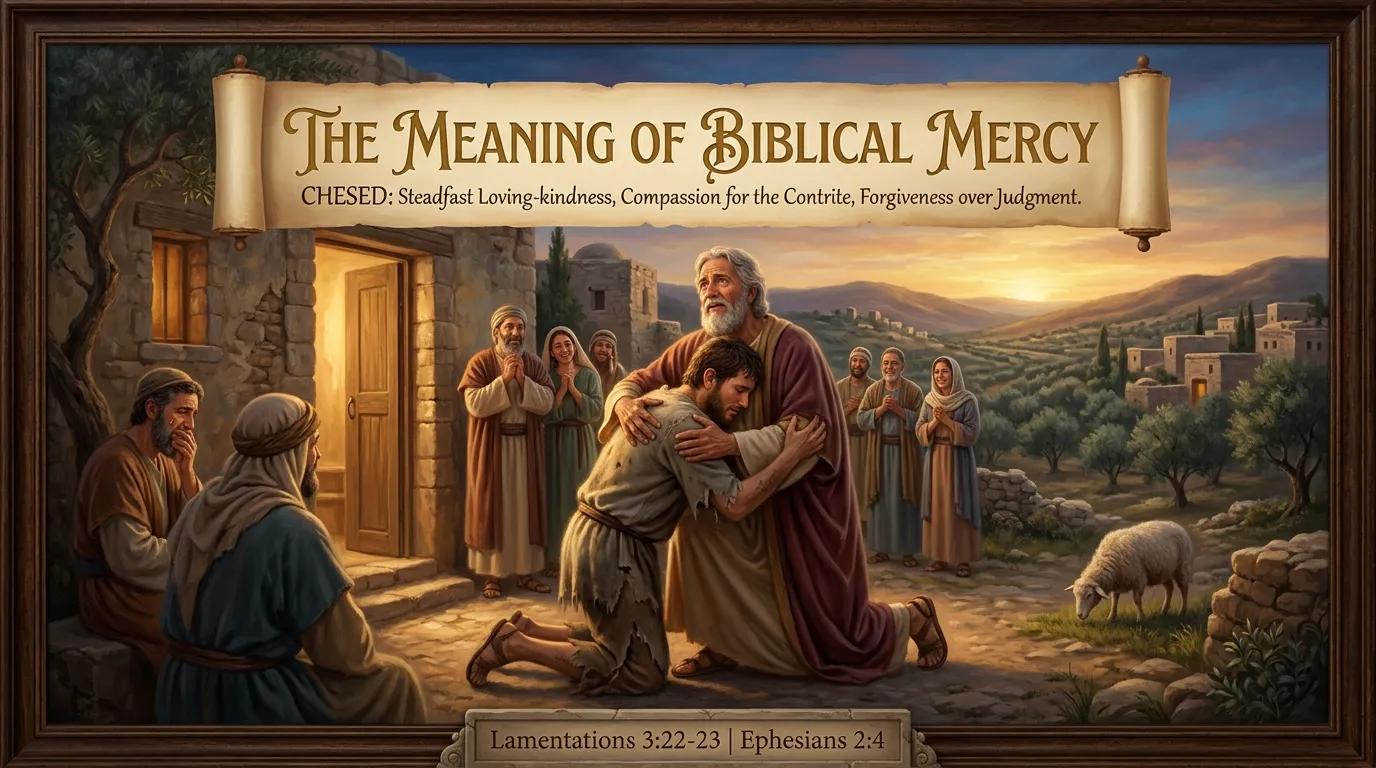
The story of the Prodigal Son (Luke 15:11–32) gives another beautiful example. After wasting everything, the son returned home expecting punishment. Instead, his father welcomed him with open arms. This story reflects God’s mercy toward every person who turns back to Him.
Mercy as a Sign of God’s Character
Throughout Scripture, mercy is part of God’s nature. He is loving, patient, forgiving, and faithful.
Micah 7:18 says:
“Who is a God like You, who pardons sin and forgives… You delight to show mercy.”
God does not show mercy because He has to. He delights in doing it because it reflects His loving character.
Mercy Brings Hope
Mercy reminds believers that failure is not the end. God can restore broken lives.
When Peter denied Jesus three times, he failed greatly. Yet Jesus forgave him and gave him new purpose (John 21:15–19). This story shows that God’s mercy leads to restoration rather than hopelessness.
A Gentle Warning
The Bible also reminds us not to ignore God’s mercy.
Romans 2:4 teaches that God’s kindness is meant to lead people to repentance. Mercy is not permission to continue in sin. Instead, it is an invitation to return to God with sincere hearts.
This balance gives believers both hope and wisdom. God’s mercy is wide enough to forgive, yet powerful enough to transform lives.
Spiritual Significance and Symbolism
The spiritual symbolism of mercy points to God’s loving presence in every season of life. Mercy reminds believers that God never leaves His children without hope.
When someone feels weak, mercy speaks of strength.
When someone feels guilty, mercy speaks of forgiveness.
When someone feels alone, mercy reminds them that God is near.
Mercy also teaches Christians to become more like Jesus. As believers receive God’s compassion, they learn to forgive family members, care for neighbors, and pray for those who have hurt them.
Imagine someone struggling with regret after making a poor choice. Instead of living in shame forever, they pray honestly, seek God, and trust His promises. Through God’s mercy, they begin to experience healing and peace.
Mercy also encourages spiritual growth. Every challenge becomes an opportunity to trust God more deeply. Through prayer, Bible reading, and faith, believers discover that God’s love remains steady even during difficult days.
This Christian meaning of mercy reminds us that our relationship with God is built on His faithful love, not our perfect performance.
Biblical Interpretations in Dreams or Real Life
Sometimes people wonder whether mercy appearing in a dream or a real-life experience carries a spiritual message.
While the Bible does not give fixed meanings for every dream, it encourages believers to seek God with prayer and wisdom.
A dream centered on mercy, forgiveness, or receiving kindness may remind someone of God’s invitation to healing, repentance, or renewed faith. It can encourage the dreamer to accept God’s forgiveness instead of carrying unnecessary guilt.
In everyday life, experiencing unexpected kindness may also remind believers of God’s mercy working through other people.
If a dream feels peaceful, it may point toward God’s comfort and reassurance.
If a dream brings conviction or sadness, it may gently encourage repentance and a closer walk with Christ.
Rather than depending only on dreams, Christians should compare every experience with Scripture, pray for discernment, and trust the guidance of the Holy Spirit.
God’s Word always remains the strongest foundation for understanding any spiritual experience.
Practical Lessons & Faith Insights
The meaning of mercy in the Bible reminds us to receive God’s forgiveness with thankful hearts and extend that same kindness to others. Spend time in prayer, read God’s Word, and remember that His compassion never runs out. Every new day is another chance to walk in faith, love, and hope, trusting that God’s mercy is always greater than our failures.
Conclusion
The meaning of mercy in the Bible reveals the heart of God’s relationship with humanity. Mercy is His loving response to human weakness, offering forgiveness instead of condemnation and hope instead of despair.
Throughout Scripture, God continually demonstrates His mercy by patiently guiding His people, forgiving those who repent, and fulfilling His promises despite human failure.
Jesus Christ perfectly displayed God’s mercy through His teachings, miracles, and ultimate sacrifice on the cross. His life reminds believers that mercy is not merely an emotion but an active expression of love, compassion, and grace.
Those who receive God’s mercy are also called to show mercy to others through forgiveness, kindness, humility, and compassion.
As you study the meaning of mercy in the Bible, let it inspire you to trust God’s unfailing love and reflect His compassionate character in your daily life.
Mercy is not only a gift from God it is also a way of living that brings peace, healing, and stronger relationships with both God and others.

I am Colleen Hoover, an author at BibleMeaniing.com. I am passionate about exploring biblical teachings and sharing meaningful insights that help readers understand Scripture more deeply. My goal is to make God’s Word relatable and inspiring for everyday life.