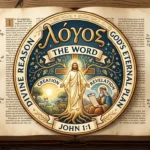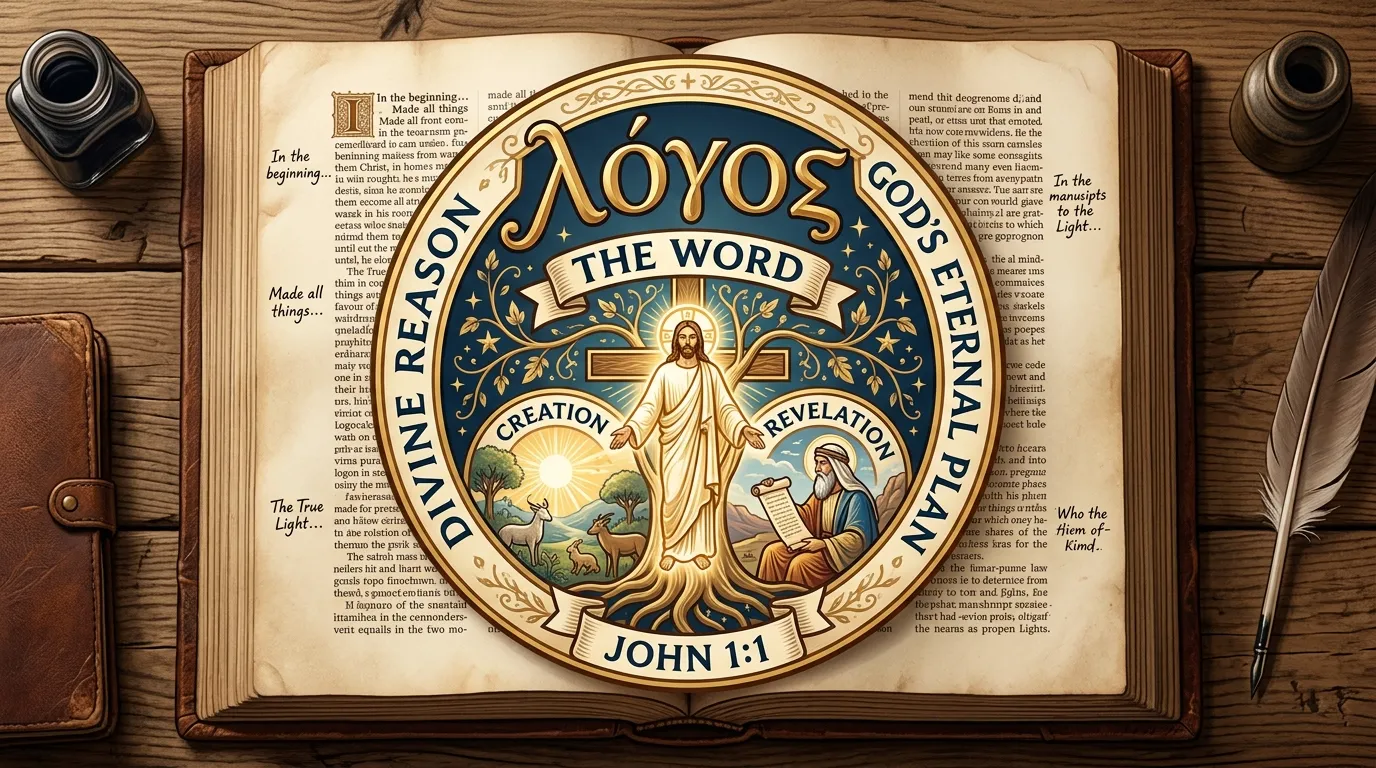
Have you ever read a Bible verse and felt that one word seemed to carry a deep meaning? One such word is Logos. It appears in the New Testament and has a powerful place in Christian faith. But what does logos mean in the Bible?
The Greek word logos is often translated as “word.” Yet its meaning can be much deeper than a spoken word. It can refer to a message, statement, or expression of thought. In the Gospel of John, the word takes on an even greater meaning. John uses Logos to describe Jesus Christ.
John 1:1 says:
“In the beginning was the Word, and the Word was with God, and the Word was God.”
This verse connects the Logos with God from the very beginning. Later, John 1:14 says that the Word became flesh. Christians understand this as a clear reference to Jesus.
For someone searching for the logos Bible meaning, this can be a beautiful reminder that God has spoken to humanity through His Word and, most fully, through Christ. Logos points us toward truth, life, guidance, faith, and the presence of God.
So, what does Logos mean spiritually? Let us look at its biblical meaning, symbolism, and connection to our daily Christian walk.
Biblical Meaning of Logos
The Greek word logos generally means word, message, statement, or expression. In the Bible, its meaning depends on the context.
One of the most important uses appears in John 1. John does not simply say that Jesus spoke God’s Word. He calls Jesus the Word, or Logos.
Logos and Jesus Christ
John 1:1 is one of the strongest passages for understanding the logos Bible meaning:
“In the beginning was the Word, and the Word was with God, and the Word was God.”
This teaches that the Logos was not something created later. The Word was with God from the beginning.
John 1:3 adds:
“Through him all things were made; without him nothing was made that has been made.”
This connects the Logos with creation. Jesus is presented as the One through whom all things came into being.
Then John 1:14 gives the central message:
“The Word became flesh and made his dwelling among us.”
For Christians, this means that Jesus is the living expression of God’s truth and character. God did not remain distant. He came near through Christ.
Logos as God’s Message
The word logos can also refer to God’s spoken or written message.
For example, Luke 8:11 uses logos in the context of the “word of God.” The Bible often presents God’s Word as something that teaches, corrects, strengthens, and guides His people.
Psalm 119:105 says:
“Your word is a lamp for my feet, a light on my path.”
This gives a simple picture of the spiritual meaning of Logos. God’s Word brings light when life feels uncertain.
When you are confused about a decision, Scripture can help shape your thoughts. When you feel weak, God’s promises can give you courage. When you lose hope, His Word can remind you that you are not alone.
Logos and Truth
Logos is also closely connected with truth.
Jesus said in John 14:6:
“I am the way and the truth and the life.”
Because Jesus is identified with the Word in John 1, the biblical idea of Logos points Christians toward the truth revealed through Christ.
This does not mean every thought, dream, or feeling is automatically a message from God. Christians are encouraged to test spiritual ideas against Scripture and the character of Christ.
A Message of Hope
The Logos also carries a message of hope. John 1:4 says:
“In him was life, and that life was the light of all humanity.”
Here, the Word is connected with life and light.
This can be deeply meaningful during difficult seasons. When everything feels dark, the Christian message is that Christ brings light. When life feels empty, He offers true life.
So, the Christian meaning of Logos can be summed up in three ideas: God’s Word, God’s revelation, and Jesus Christ as the living Word.
Spiritual Significance and Symbolism of Logos
The spiritual symbolism of Logos is rich but simple at its heart.
1. Logos Represents God’s Communication
God’s Word shows that God desires to communicate with people. Scripture gives believers wisdom, correction, comfort, and hope.
When you spend time reading the Bible, you are not simply reading old words. You are learning about God’s heart, His promises, and His plan of salvation.
2. Logos Represents Jesus
The deepest Christian meaning of Logos is Jesus Christ.
John’s opening verses point to Jesus as the eternal Word. This makes Logos a powerful symbol of God’s presence among humanity.
Jesus showed God’s love through His life, teaching, death, and resurrection.
3. Logos Represents Light
John 1 connects the Word with light. Light helps people see clearly.
Spiritually, Christ can help believers see their lives with greater wisdom. A person who feels lost may find direction through prayer and Scripture.
For example, someone facing a hard choice may pray, read Scripture, and seek wise Christian advice. The answer may not come instantly, but God’s Word can provide a steady foundation.
4. Logos Represents Transformation
God’s Word can change the way a person thinks and lives.
Romans 12:2 encourages believers to be transformed by the renewing of their minds. This shows that faith is not only about knowing information. It is also about becoming more like Christ.
The Logos invites Christians to move from fear toward faith, from confusion toward truth, and from spiritual weakness toward deeper trust in God.
Biblical Interpretations of Logos in Dreams or Real Life
Some people search for the logos Bible meaning because they saw the word “Logos” in a dream, heard it during prayer, or noticed it repeatedly.
If Logos appears in a dream, it is wise not to assume automatically that the dream is a direct divine message. The Bible encourages believers to seek wisdom and test spiritual experiences.
Still, the idea can invite meaningful reflection.
If you dream about words, books, Scripture, or light, you might reflect on whether God is drawing your attention back to His Word. A peaceful dream may encourage you to seek God with greater trust. A confusing or fearful dream may be a reason to slow down, pray, and compare what you experienced with biblical truth.
Remember that Christian dream interpretation should remain grounded in Scripture. Dreams should never replace the Bible or become the sole basis for major life decisions.
James 1:5 offers a helpful reminder:
“If any of you lacks wisdom, you should ask God.”
Prayer, Scripture, and wise counsel can help you understand what an experience may mean.
Practical Lessons & Faith Insights
The logos Bible meaning invites you to stay close to God’s Word and to Jesus Christ. Read Scripture with an open heart. Pray when you feel unsure. Let God’s truth shape your thoughts and choices.
When life feels dark, remember the biblical picture of Christ as light and life. You do not need to understand everything at once. Trust God, seek His wisdom, and take the next faithful step.
Conclusion
The logos Bible meaning carries a deep and beautiful message for every Christian who wants to understand God more clearly.
In the Bible, especially in John 1, Logos means “the Word” and points directly to Jesus Christ. Jesus is not only someone who spoke God’s truth; He is presented as the living Word through whom God revealed Himself to the world.
John 1:1 says, “In the beginning was the Word, and the Word was with God, and the Word was God.”
This powerful verse shows that Christ existed from the beginning. John 1:14 then tells us that “the Word became flesh,” showing the Christian belief that Jesus came into the world to reveal God’s love, truth, grace, and salvation.
The spiritual meaning of Logos can also remind us of light, life, truth, wisdom, and divine guidance. When you feel confused, God’s Word can give direction. When you feel afraid, His promises can give peace.
When you feel spiritually weak, Scripture can renew your faith. And when you feel far from God, the message of Christ reminds you that God has come near.
If you came across the word Logos in a dream, prayer, Bible study, or personal experience, do not rush to assume that it is a direct message from God.
Instead, use the experience as an opportunity to pray and search Scripture. The Bible should remain the foundation for understanding spiritual experiences.

I am Colleen Hoover, an author at BibleMeaniing.com. I am passionate about exploring biblical teachings and sharing meaningful insights that help readers understand Scripture more deeply. My goal is to make God’s Word relatable and inspiring for everyday life.